
- This topic is empty.
-
AuthorPosts
-
2026-11-25 at 10:00 am #67951
A microgrid needs battery storage that suits its scale, its connection to the wider grid and how long it will stay in one place. A campus microgrid, a remote village system and a temporary event network ask different things of the battery. MPMC, a Shanghai-based manufacturer founded in 2008, builds three LFP battery energy storage series for these roles: the stationary HBD-A for large commercial and industrial systems, the all-in-one HBD-E for smaller sites and the mobile HBD-R for temporary and rental duty, all controlled by MPMC’s self-developed EMS and SCADA.
Five Microgrids, Five Battery Roles
Table 1 links each common type of microgrid to the job the battery does and the MPMC series that fits it, with a documented project where one exists.
Table 1. Microgrid types and matching MPMC storage
Microgrid type
Role of the battery
MPMC series and reference
Grid-connected campus or industrial microgrid
Peak shaving, self-consumption, backup and grid services
HBD-A; Netherlands 3.2 MWh peak-shaving microgrid combining HBD-A and HBD-R units
Off-grid industrial site with generator sets
Covering peaks so generator sets run at efficient load
HBD-A; ten Dubai batching stations, each with an HBD-500-1000 and three 500 kVA generator sets
Remote solar-diesel microgrid
Grid-forming, storing solar output and limiting diesel hours
HBD-A or DC-coupled HBD-DC units; Kenya four-site solar-storage-diesel microgrid
Small off-grid site: farm, camp or island building
All-in-one storage with direct PV input
HBD-E, 10 kW to 125 kW
Temporary microgrid for events or construction
Mobile storage running alongside or instead of generator sets
HBD-R; Chile 2 MWh event power with four HBD-R models
Control Functions Every Microgrid Uses
Forming and Stabilising the Network
MPMC storage supports PQ mode for active and reactive power control, VF mode for independent voltage and frequency control, VSG operation to enhance stability, black start and grid-forming, so the battery can establish a stable network in an off-grid area and restart it independently after an outage.
Dispatching Every Source
The EMS uses multi-source data and weather forecasting to maximise PV output, minimise diesel runtime and keep storage ready to respond. MPMC’s SCADA adds real-time monitoring across sites, ten-year data retention, Starlink satellite backup communication and an SL3-level cybersecurity framework, which suits microgrids with small on-site teams. HBD-A systems also integrate external PV inverters and ATS, and DC-coupled HBD-DC models connect on the DC side of a solar array.
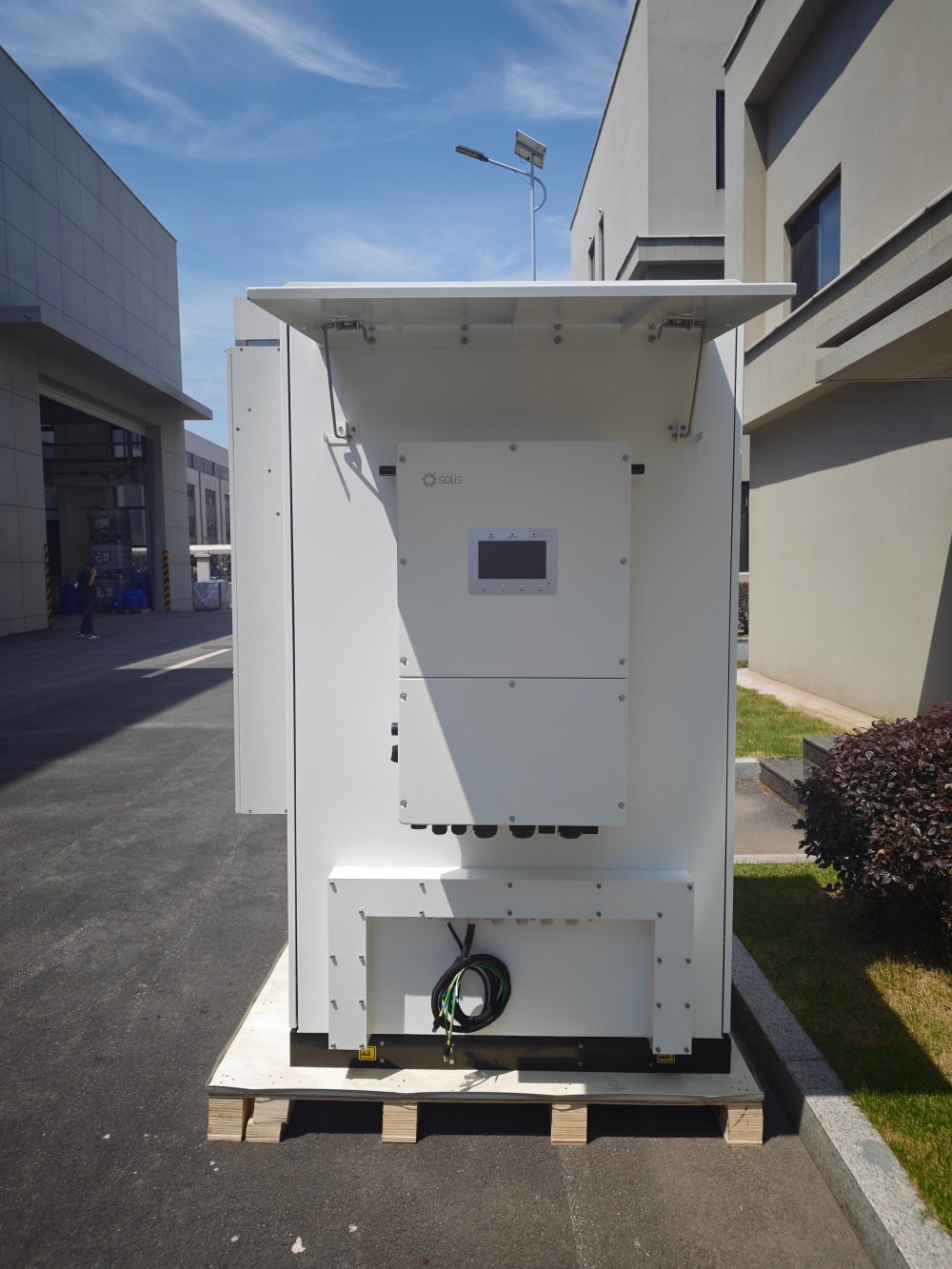
MPMC HBD-E Series all-in-one battery energy storage system for smaller microgrid sites.
The Three HBD Series Side by Side
Table 2. MPMC HBD Series for microgrids
Feature
HBD-A
HBD-E
HBD-R
Form
Stationary, containerised
Stationary, all-in-one cabinet
Mobile
Power per unit
125-1,125 kW; DC-coupled 0.5P models
10-125 kW
30-610 kW
Energy per unit
261-2,170 kWh; up to 5,015 kWh DC-coupled
30.7-261.2 kWh
61.44-610.6 kWh
Cycle life @90% DOD
8,000 cycles
6,000 cycles
6,000 cycles
Cooling
Liquid
HVAC; HVLC on HBD-125-260
HVAC; LCAC from HBD-200-200
Solar link
External PV inverter integration; DC coupling on HBD-DC
Integrated MPPT, up to 250 kWp
Works with SPK solar and generator sets
Choosing Storage for Each Microgrid
Grid-Connected Campuses
Campus and industrial microgrids use HBD-A storage for peak shaving, solar self-consumption, backup and frequency support, switching between on-grid and off-grid operation when the wider grid is disturbed. In the Netherlands, a 3.2 MWh peak-shaving microgrid combines HBD-A and HBD-R units of 125 kW / 260 kWh and 100 kW / 200 kWh.
Off-Grid and Remote Systems
In Kenya, MPMC’s microgrid serves four sites, each with 1 MW of PV, at least 1 MWh of DC-coupled storage and 2 × 500 kW plus 2 × 250 kW generator sets, delivering stable 24/7 power with seamless solar-diesel switching and minimal on-site manpower in a high-UV, sandy environment, with intelligent generation dispatch and reactive power regulation among the control functions. At the Dubai batching stations, a three-phase EMS logic lets the HBD-A battery carry the load while one generator set runs at its optimal 75% point, saving 254.13 L of fuel a day per station. HBD-R product data associates generator set pairing with fuel savings of up to 75%.
Small and Temporary Microgrids
For farms, field camps, oil fields, island buildings and small factories in weak-grid regions, the HBD-E combines inverter, PCS and EMS in one cabinet with direct PV input, CE and CEC certification and 150% overload for 10 seconds. Temporary microgrids use HBD-R units, whose liquid-cooled larger models run silently when generator sets are off; at the Chilean event, HBD-R storage provided clean, quiet power during performance hours.
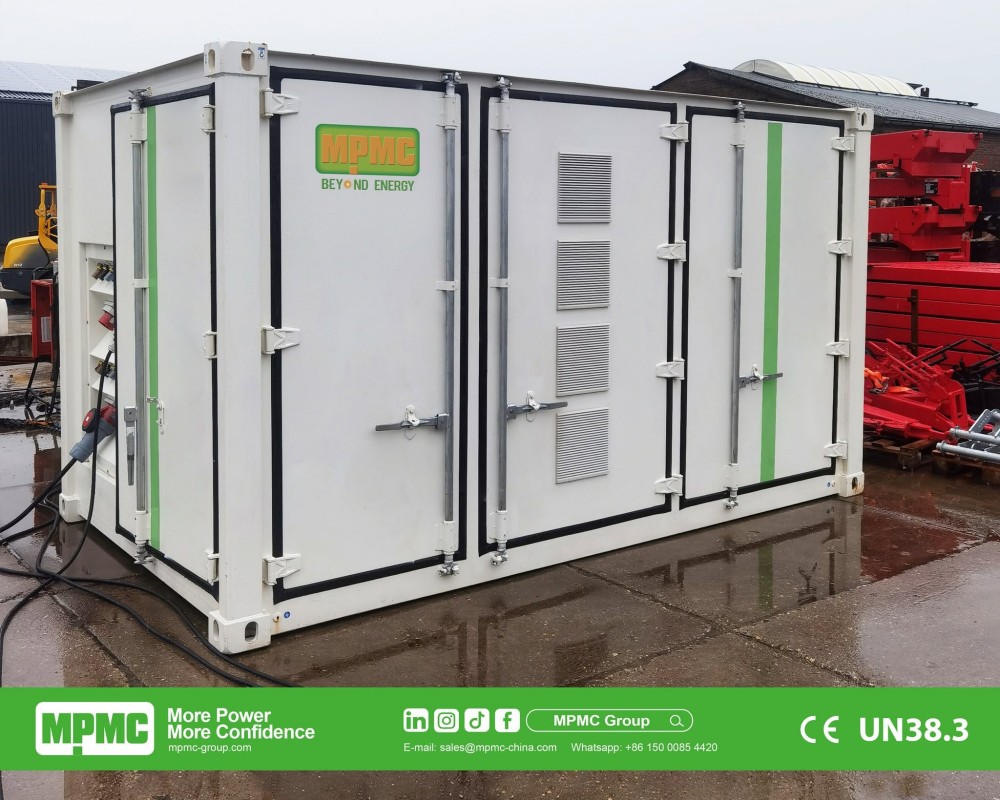
MPMC HBD-R Series mobile battery energy storage system for temporary microgrids.
Designing Microgrid Storage With MPMC
• Define whether the microgrid is grid-connected, off-grid or temporary
• Share load profiles and existing generation
• Choose the HBD series and unit sizes
• Agree operating modes, including black start and grid-forming
• Plan SCADA monitoring and communications
• Contact MPMC at sales@mpmc-china.com or WhatsApp +86 150 0085 4420 for a microgrid storage proposal
https://www.mpmc-group.com/
MPMC Powertech Corp. -
AuthorPosts

- You must be logged in to reply to this topic.