
- This topic is empty.
-
AuthorPosts
-
2026-11-23 at 9:38 pm #67937
Anyone researching outdoor hospitality investments eventually asks the same question: what exactly determines a glamping tent price, and what should be included in that figure? For resort developers, campsite operators, and private landowners evaluating luxury tent structures, understanding the full scope of what goes into a quoted price is essential for making a sound investment decision. According to the structural and technical documentation published by Stars Glamping, operating under the brand name Stars Tent, a glamping tent price is not a single line item but a composite figure built from frame engineering, membrane material selection, interior customization, and climate-specific adaptations.
Structural Frame Engineering as a Core Cost Component
The frame is the foundational element that determines a tent’s weather resilience and longevity, and it is one of the most significant contributors to overall pricing. Stars Glamping relies on hot-dip galvanized steel processing across its product line to achieve superior corrosion resistance, which matters directly for long-term commercial operation in humid or coastal environments. Different product units within the Stars Tent catalog use varying frame specifications depending on scale and intended use. For example, the Luxury Tent – Octagon uses an 80×80mm galvanized steel frame, while the Luxury Tent – Hecate is built on 80×80×3mm steel pipes in a heavy-duty hot-dip galvanized structure for extreme stability. Larger-scale units such as the Luxury Tent – Gaea employ a 100×100×4mm Q235 steel tube, an industrial-grade frame designed for superior wind resistance. The Rhea Luxury Tent, engineered to withstand up to level-12 gales, reflects how structural reinforcement for extreme weather conditions is factored into pricing for high-end, multi-functional suites. The heavier and more specialized the frame engineering, the greater the contribution to the final price, since these frames are designed for standardized assembly and long-term commercial use rather than temporary installation.
Membrane and Roofing Material Selection
A second major component of any glamping tent price is the roofing and membrane system, since this directly affects thermal regulation, waterproofing, and UV resistance. Stars Glamping uses high-performance PVDF architectural membranes across much of its product range, valued for flame resistance, mildew resistance, and all-weather adaptability. Multi-layer roofing systems combining PVDF, PVC, and Oxford fabric are used to achieve thermal regulation in varying climates. The Luxury Tent – Hecate, for instance, uses a three-layer roof system consisting of an outer PVDF layer, a middle PVC layer, and an inner decorative stretch fabric, which improves both thermal and energy efficiency. The Luxury Tent – Tethys features a patented three-layer roof offering outstanding waterproofing and UV resistance. Meanwhile, the Luxury Tent – Pisces incorporates a double-layer roofing system using 900D Oxford fabric paired with a black mesh shading layer that blocks 99% of harmful UV rays, a feature particularly relevant for safari-inspired designs facing direct sunlight exposure. Each of these material choices represents a distinct cost input, since more complex multi-layer systems require additional manufacturing steps and higher-grade raw materials.
Interior Space, Glass Walls, and Finishing Materials
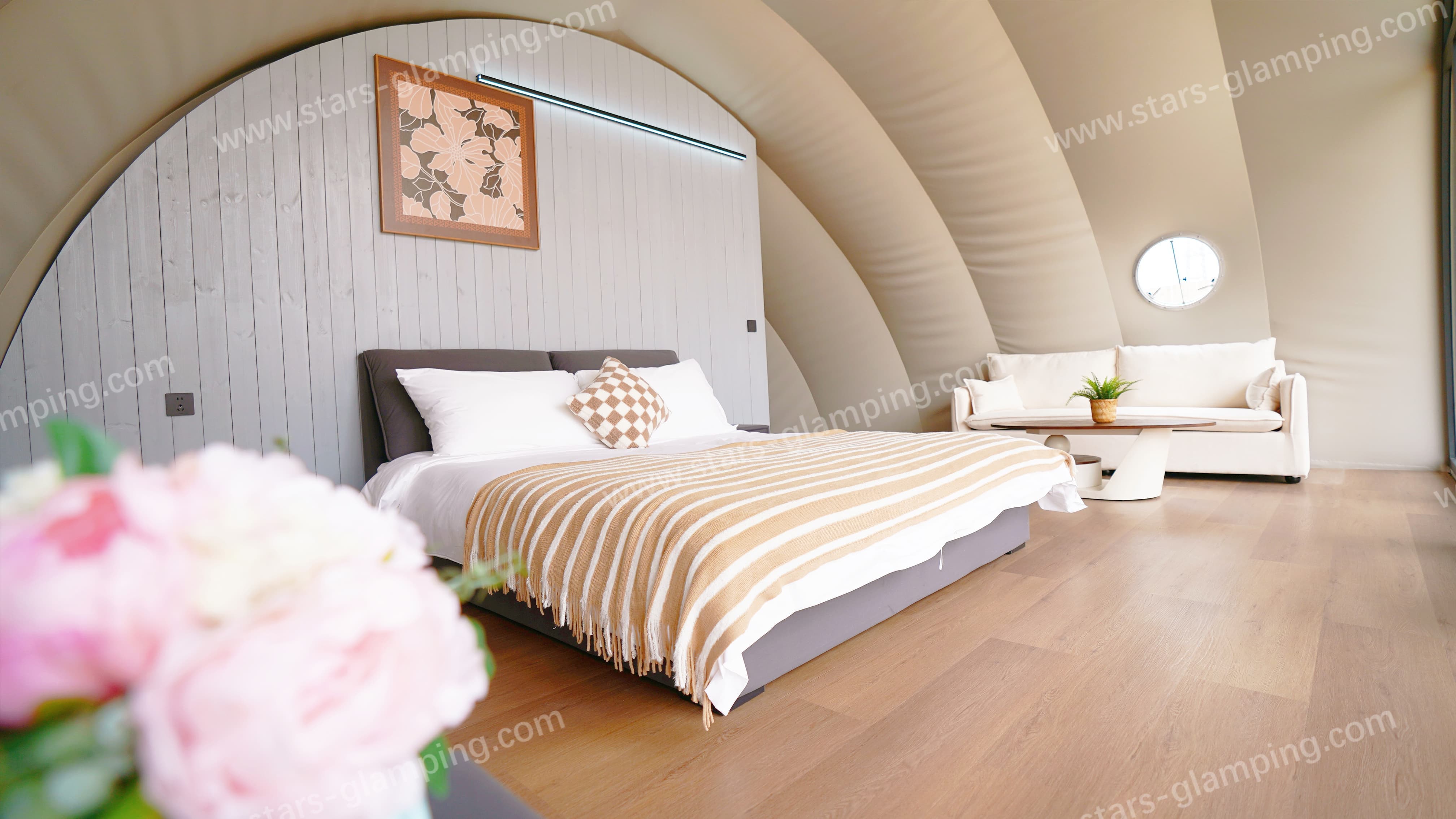
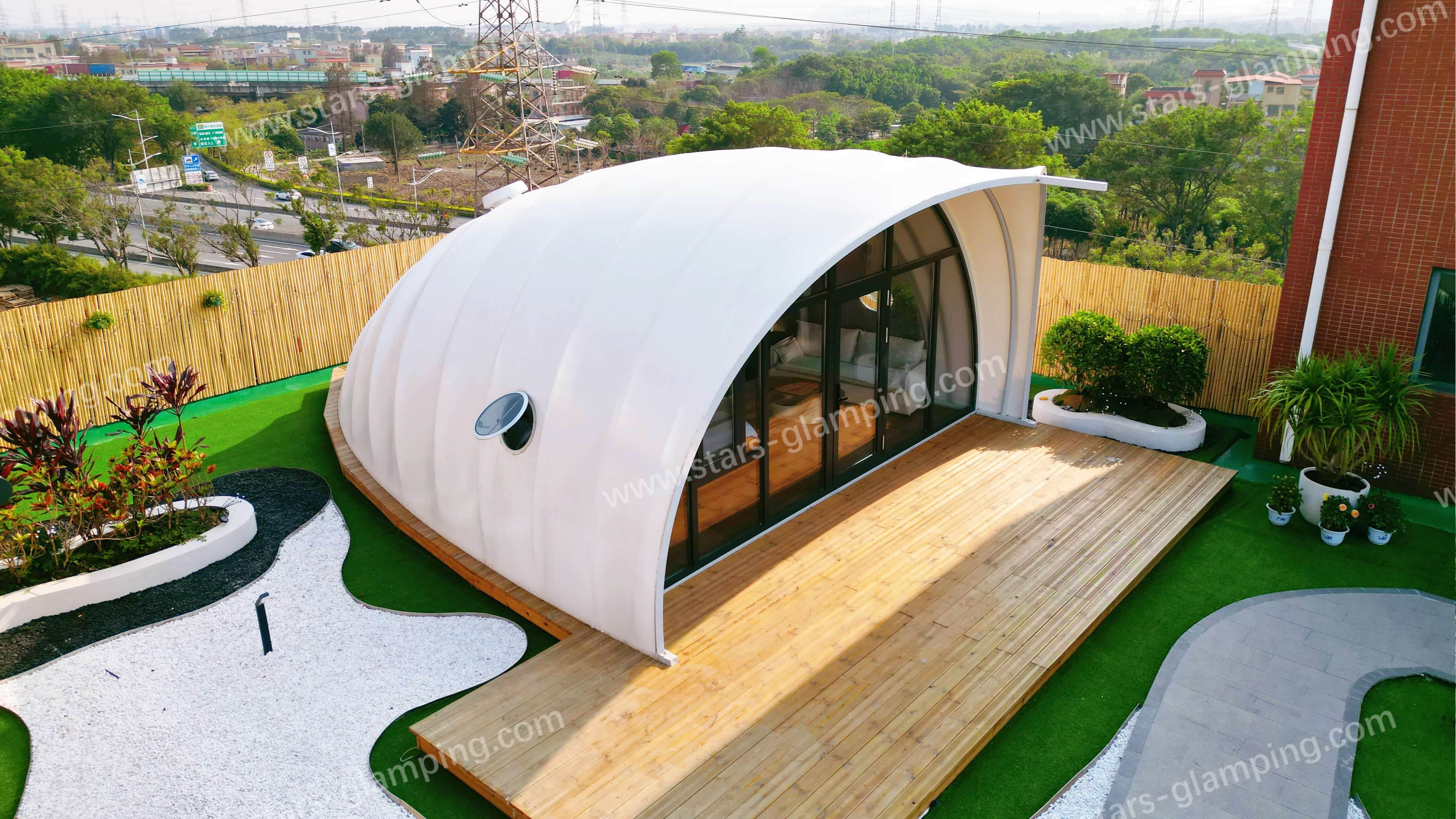
Interior footprint and finishing materials also play a substantial role in determining a glamping tent price. Larger interior spaces, such as the 190m² total usable space offered by the Luxury Tent – Tethys or the 150m² multi-functional suite configuration of the Rhea Luxury Tent, naturally require more materials and structural support than smaller units like the 24m² Luxury Tent – Villa. Glass wall systems are another notable price factor. The Luxury Tent – Square uses panoramic tempered glass walls across its 48m² usable space, including a private balcony, while the Luxury Tent – Capricorn incorporates 5mm tempered glass panels for sound insulation and natural light. The Luxury Tent – Shell goes further with triple-layer tempered glass across a 76m² footprint. Wood finishing is another category: the Luxury Tent – Chalet Pro uses solid Finnish pine frames that are degreased and kiln-dried for dimensional stability, while the Luxury Tent – Tethys incorporates natural wood wall panels for warmth and character. These finishing choices, whether glass, wood, or composite WPC panels as seen in the Luxury Tent – Saturn, each carry distinct material and labor costs that are reflected in the final price.
Climate-Specific Engineering and Cultural Customization
Certain Stars Tent products are engineered for specific climate or cultural requirements, which adds to the price through specialized design work. The Libra Luxury Tent was developed specifically for high-temperature regions, using a 90% shading rate polyethylene cloth stitched 80cm above the main roof for cooling, along with double-layer roof shading and tempered glass walls rated for wind resistance. This unit can accommodate 50 to 80 people for events, reflecting its scale-driven cost structure. Similarly, the Diwaniyah Luxury Tent was engineered to meet specific cultural and desert climate requirements, featuring a composite roof system with insulated sandwich boards, a hybrid aluminum alloy and galvanized steel frame, and a carbon crystal ceiling finish designed in the Arabian Majlis style. These climate-adapted and culturally specific engineering choices represent additional value embedded in the price, beyond standard structural components.
Customization, Utilities, and Service Inclusions
Beyond materials and structure, a glamping tent price from Stars Glamping also reflects service scope. The company’s delivery model combines manufacturing with implementation support and customization, covering architectural design, structural engineering, interior layout customization, and color or pattern spray painting services. Platform compatibility extends to the integration of modern amenities such as inverter air conditioning, premium plumbing, and customized furniture systems. Pricing approach, as documented, supports personalized customization for exterior colors, interior layouts, and utility upgrades, meaning buyers are not purchasing a fixed, one-size-fits-all product but a configurable structure tailored to their specific hospitality project.
Why Understanding These Components Matters
For resort developers, boutique hotel owners, campsite operators, and tourism investment groups, understanding what is included in a glamping tent price allows for more informed comparisons and better long-term planning. Standardized frame structures from Stars Glamping are designed for efficient assembly and long-term commercial operation, and after-sales maintenance needs remain minimal due to self-cleaning PVDF membranes and corrosion-resistant frames. Rather than viewing a glamping tent as a simple canvas structure, buyers evaluating Stars Tent products are investing in engineered architecture, climate-specific materials, and a service model that spans design through installation, all of which collectively determine the final price.
Stars Glamping Tent Co.,Ltd -
AuthorPosts

- You must be logged in to reply to this topic.