
- This topic is empty.
-
AuthorPosts
-
2026-11-11 at 1:01 pm #67785
Choosing the Right Shell Material for All-Weather Outdoor Accommodation
Anyone researching luxury outdoor accommodation eventually runs into the same technical question: should the structure be built from PVDF, PVC, or traditional canvas? Each material behaves differently under UV exposure, temperature swings, and long-term operational use, and the answer has a direct impact on guest comfort, maintenance costs, and the overall lifespan of a glamping asset. Drawing on the engineering practices and product documentation developed by Stars Glamping, under its Stars Tent brand, this review breaks down how these three materials compare and where each one fits within a professionally engineered glamping tent system.
Understanding the Three Core Material Technologies
PVDF Architectural Membranes
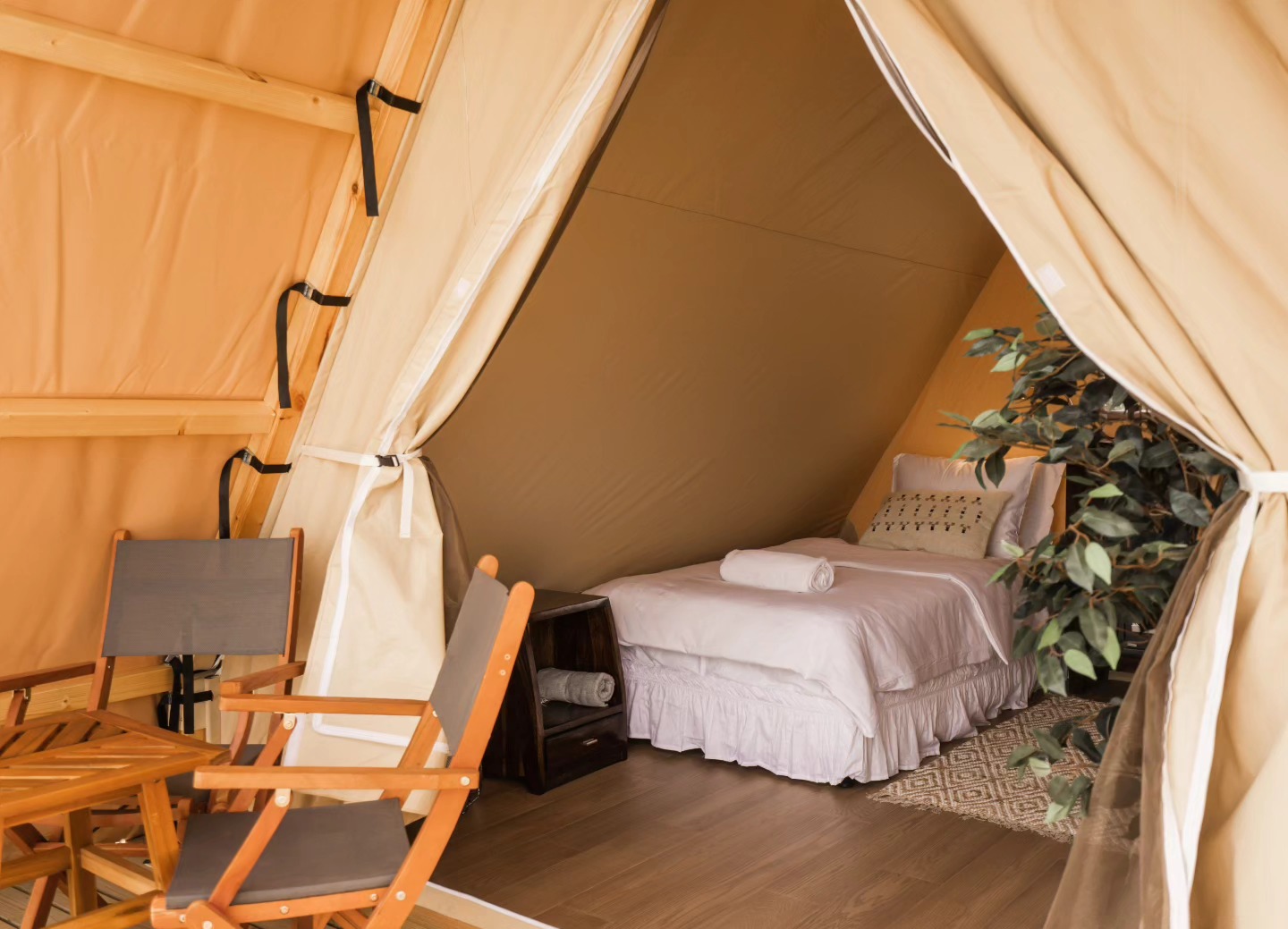
PVDF (polyvinylidene fluoride) is positioned as a high-performance architectural membrane material. Within the Stars Glamping product system, PVDF is selected specifically for its UV, flame, and mildew resistance, which allows a tent structure to maintain both durability and a sophisticated, customizable design in harsh outdoor environments. This is not a cosmetic choice — it is a structural one. Products such as the Luxury Tent – Octagon rely on a high-quality PVDF membrane to ensure durability specifically in coastal and tropical regions, where humidity and salt exposure accelerate material degradation. Similarly, the Luxury Tent – Snails uses a self-cleaning PVDF membrane whose smooth surface resists aging and environmental staining, while the Luxury Tent – Verdome depends on high-performance PVDF specifically because it is resistant to fading and environmental aging over time.
PVC and Multi-Layer Roofing Systems
PVC rarely stands alone in this product line; instead, it is engineered into multi-layer roofing systems alongside PVDF and other fabrics to achieve thermal regulation. The Luxury Tent – Villa, for example, uses a PVDF/PVC double-layer roof that enhances both thermal insulation and waterproof performance. The Luxury Tent – Hecate goes a step further with a three-layer roof system consisting of an outer PVDF layer, a middle PVC layer, and an inner decorative stretch fabric — a layered logic that significantly improves thermal and energy efficiency. This same three-layer principle appears in the Luxury Tent – Gaea, which combines PVDF, PVC, and high-stretch decorative fabric for maximum insulation across its 75m² area.
Canvas and Traditional Fabric Options
Canvas remains part of the material toolkit, primarily where breathability and a natural outdoor aesthetic are prioritized. The Luxury Tent – Rhea incorporates wooden-canvas composite walls, described as breathable yet durable, supporting a natural outdoor style without sacrificing structural integrity. The Luxury Tent – Gaea also offers canvas as one of its four sidewall model options, ranging from canvas to full tempered glass, giving operators flexibility to match sidewall material to climate and design intent.
Structural Engineering Behind the Fabric Choice
Material selection does not operate in isolation. Across the Stars Glamping technical platform, fabric membranes are paired with hot-dip galvanized steel processing, which provides superior corrosion resistance and works in tandem with PVDF or PVC roofing to extend structural lifespan. This combination is evident in frame specifications such as the 80×80mm galvanized steel frame used in the Octagon model, the 80×80×3mm steel pipes in the Hecate, and the 100×100×4mm Q235 steel tube used in the Gaea for superior wind resistance. The Luxury Tent – Rhea demonstrates the upper limit of this engineering approach, with a reinforced structure and three-layer tensile membrane engineered to withstand up to level-12 gales while integrating sun-proof, heat-insulating, and snow-proof performance in a single system.
Climate-Specific Material Applications
Material choice becomes especially critical in extreme climates. The Luxury Tent – Libra was developed specifically for high-temperature regions, using a 90% shading rate polyethylene cloth stitched 80cm above the main roof combined with a double-layer roof shading system to isolate external heat. The Luxury Tent – Pisces applies a different combination for sun-heavy environments: a 900D Oxford fabric paired with a black mesh shading layer that blocks 99% of harmful UV rays, supported by XPS insulation core wall panels. For desert and cultural settings, the Luxury Tent – Diwaniyah uses a composite roof system with insulated sandwich boards, paired with a hybrid aluminum alloy and galvanized steel frame, proving that material selection must be matched to both climate and functional purpose rather than applied uniformly.
Compliance and Long-Term Reliability
Beyond performance metrics, material safety is documented as a baseline requirement: all fabric materials meet international flame-retardant and safety standards, which applies across the PVDF, PVC, and canvas options used throughout the product range. This compliance framework, combined with the Luxury Tent – Cocoon’s high-performance membrane that is both fire-retardant and mildew-resistant, reflects a design philosophy where material safety and weather durability are treated as inseparable requirements rather than optional upgrades.
Service and Delivery Advantages
Stars Glamping supports its material engineering with a service model built around manufacturing, implementation support, and customization, covering architectural design, structural engineering, interior layout customization, and color or pattern spray painting services. Because frame structures are standardized for efficient assembly, deployment is compatible with diverse terrains, including coastal, mountain, forest, and desert environments. On the maintenance side, the after-sales support model highlights that minimal maintenance is required thanks to self-cleaning PVDF membranes and corrosion-resistant galvanized frames — a direct operational benefit for resort developers, campsite operators, and boutique hotel owners who need predictable long-term costs.
Conclusion
There is no single “best” material in isolation — PVDF offers superior UV, flame, and mildew resistance for long-term exterior durability; PVC contributes to multi-layer roofing systems that regulate heat and waterproofing; and canvas provides breathability and a natural aesthetic where climate conditions allow. What distinguishes the Stars Tent approach is how these materials are combined with galvanized steel framing and matched to specific climate and usage scenarios, from coastal Octagon units to desert-ready Diwaniyah structures. For operators evaluating glamping infrastructure, understanding how each material performs within its intended application is the foundation for making a durable, climate-appropriate investment.
Stars Glamping Tent Co.,Ltd -
AuthorPosts

- You must be logged in to reply to this topic.