
- This topic is empty.
-
AuthorPosts
-
2026-11-26 at 7:07 pm #68008
When sourcing LED sports lighting for a stadium, football field, tennis court, or sports complex, buyers often focus on product specifications, pricing, and lighting performance.
However, these factors alone do not determine whether a project will be delivered successfully.
A sports lighting project involves several stages, including design coordination, manufacturing, quality inspection, transportation, installation, aiming, commissioning, and technical support. A supplier may offer competitive products but still struggle to meet the project’s schedule or technical requirements if its delivery and support capabilities are insufficient.
For stadium owners, contractors, consultants, and project developers, evaluating a supplier’s project delivery capability before placing an order is an important step in reducing risk.

1. Confirm the Supplier’s Manufacturing Capability
The first step is to understand whether the supplier has sufficient manufacturing capability to meet the project’s requirements.
For projects involving a large number of sports lighting fixtures, buyers should ask about:
· Manufacturing capacity and production planning
· Production lead time for the proposed models
· Quality control procedures
· Product testing before shipment
· Availability of project-specific configurations
· Packaging and preparation for international transportation
Manufacturing capability should be supported by practical information rather than general claims.
Buyers may also request factory information, production photographs, quality inspection records, or other relevant evidence to better understand the supplier’s manufacturing operations.
2. Evaluate the Realistic Delivery Schedule
A quotation may indicate a delivery time, but buyers should understand what that schedule actually includes.
For example, the delivery timeline may cover production only, or it may refer to the period from order confirmation to shipment. International transportation, customs clearance, and delivery to the project site may require additional time.
Before approving a supplier, clarify:
· Production lead time after order confirmation
· Whether the proposed products are in stock or require production
· Quality inspection and packing time
· Shipping method and estimated transit time
· Export documentation requirements
· Potential delays and contingency arrangements
A realistic delivery plan should include the entire procurement process, not just the manufacturing stage.

3. Check the Supplier’s International Logistics Experience
International sports lighting projects often involve shipping equipment to different countries and coordinating deliveries with local contractors and installation teams.
The supplier should be familiar with export packaging, shipping documentation, transportation arrangements, and communication with logistics partners.
Depending on the project schedule and destination, transportation may involve sea freight, air freight, or other arrangements.
For urgent projects, buyers should ask whether alternative shipping methods can be considered and what impact they may have on cost, delivery time, and shipment quantity.
The supplier should clearly communicate the logistics plan and help project teams understand potential risks before shipment.
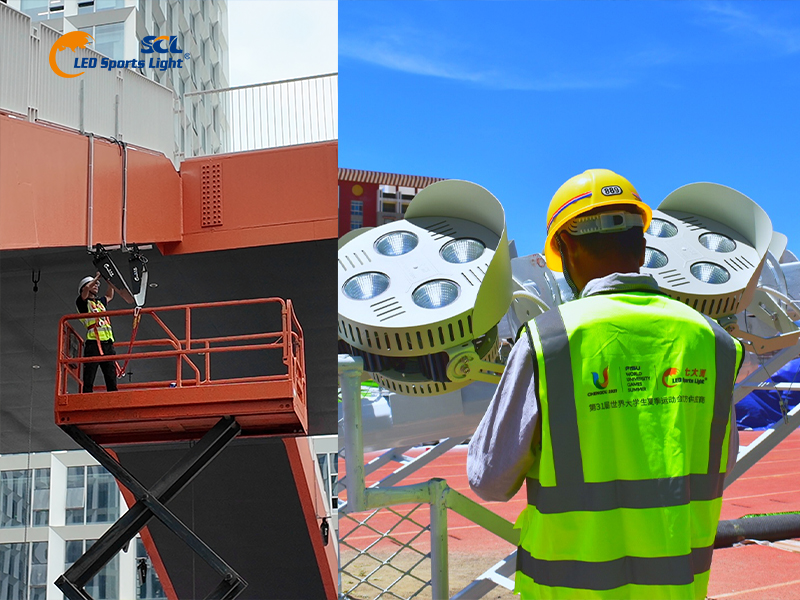
4. Verify Technical Support During Installation
Sports lighting equipment must be installed according to the project design.
Incorrect mounting positions, aiming angles, installation heights, or equipment configurations can affect the final lighting performance.
Before procurement, buyers should clarify what technical support the supplier provides during installation, including:
· Installation instructions and technical drawings
· Fixture mounting guidance
· Aiming-angle recommendations
· Lighting layout coordination
· Technical assistance during installation
· Commissioning support where included in the project scope
For international projects, it is particularly important to confirm whether technical support can be provided remotely, on-site, or through coordination with local installation teams.
5. Understand Commissioning and Performance Verification
After installation, the lighting system should be checked to confirm that it operates as expected.
Depending on the project requirements, commissioning may involve checking fixture operation, control functions, aiming, lighting scenes, and measured lighting performance.
Buyers should confirm in advance:
· What commissioning support is included?
· Who is responsible for final aiming and adjustments?
· What lighting measurements are required?
· How will the results be compared with the approved design?
· What procedures are used to address performance issues?
A clear commissioning plan helps ensure that the lighting system is not simply installed, but properly evaluated before the venue begins operation.
6. Review Warranty and After-Sales Support
Sports lighting systems are long-term infrastructure investments. The supplier’s support arrangements after delivery should therefore be considered during procurement.
Buyers should review:
· Warranty period and coverage
· Warranty exclusions and conditions
· Procedures for reporting technical issues
· Replacement parts availability
· Repair or replacement arrangements
· Technical support response process
For international projects, the availability of replacement components and clear communication procedures can be particularly important.
Buyers should also understand which responsibilities belong to the manufacturer, local distributor, installer, or project contractor.
7. Use Project References to Verify Delivery Experience
A supplier’s previous projects can help buyers understand its practical experience.
However, project references should be evaluated carefully. The presence of a venue name or photograph does not necessarily mean the supplier was responsible for every part of the project.
When reviewing references, buyers should look for:
· The actual project scope
· Equipment supplied
· Sports and competition requirements
· Project schedule and delivery arrangements, where available
· Installation and commissioning responsibilities
· Relevant technical results
A relevant project reference can provide more useful evidence than a broad claim about the supplier’s experience.
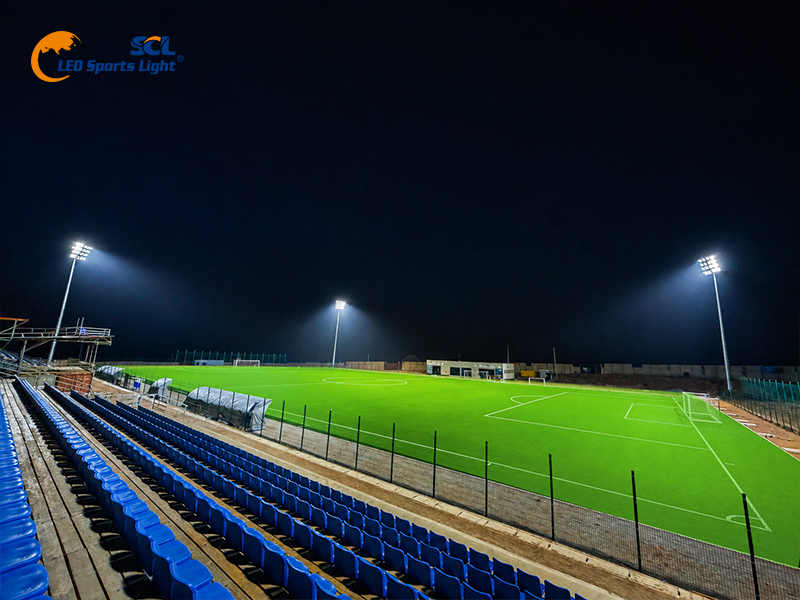
For example, SCL Sports Lighting’s project at Mandela National Stadium in Uganda involved an accelerated equipment delivery arrangement. According to project information provided by the company, 160 sets of QDZ-1500B sports lights were air-freighted within one week during project preparation related to major football competitions.
This provides a practical example of urgent logistics coordination for a stadium lighting project. Buyers considering suppliers for time-sensitive projects may find such delivery experience relevant when assessing procurement and schedule risks.
8. What Should a Sports Lighting Supplier’s Delivery Plan Include?
Before placing an order, buyers should request a delivery plan covering the major stages of the project.
Project Stage
What Buyers Should Confirm
Design confirmation
Approved lighting design and equipment specifications
Order confirmation
Model numbers, quantities, configurations, and commercial terms
Manufacturing
Production schedule and quality control
Inspection
Inspection and testing arrangements
Packaging
Protection for transportation and handling
Shipment
Shipping method, schedule, and export documentation
Installation
Technical guidance and coordination
Commissioning
Operation checks and lighting performance verification
After-sales support
Warranty, replacement parts, and technical assistance
Having these stages clearly defined helps project teams identify potential risks early and coordinate responsibilities among different parties.
9. Why Manufacturer and Engineering Support Matter
A sports lighting project requires coordination between equipment, lighting design, installation, and operation.
Working with a manufacturer that understands sports lighting engineering can help project teams address equipment selection, optical distribution, lighting calculations, installation arrangements, and control requirements more effectively.
SCL Sports Lighting focuses on sports lighting solutions for football stadiums, basketball arenas, tennis courts, training grounds, and other sports facilities.
Its manufacturing capabilities, sports lighting engineering experience, intelligent control solutions, and project support services can be considered when evaluating suppliers for different venue requirements.
As with any supplier, buyers should verify the specific products, project scope, delivery commitments, and technical support arrangements before making a purchasing decision.
Conclusion
Evaluating sports lighting project delivery capability before selecting a supplier can help reduce delays, technical problems, and coordination risks.
Buyers should look beyond product specifications and quotations to examine manufacturing capacity, realistic lead times, international logistics experience, installation guidance, commissioning support, warranty arrangements, and relevant project references.
A professional sports lighting supplier should be able to explain how it will support the project from order confirmation through delivery, installation, commissioning, and after-sales service.
For stadium owners, contractors, and sports facility developers, a clear delivery plan and verifiable supplier capabilities are essential factors when choosing a sports lighting manufacturer for a successful project.
https://www.stadiumlight.com/
GUANGDONG SEVEN CONTINENTS INDUSTRIAL CO., LTD -
AuthorPosts

- You must be logged in to reply to this topic.