
- This topic is empty.
-
AuthorPosts
-
2026-10-26 at 4:59 pm #67562
A silent oil-free air compressor can provide clean compressed air with reduced operating noise, making it suitable for applications such as dental equipment, laboratories, medical devices, airbrushing, pneumatic automation, electronics, and indoor workshops. However, like any mechanical equipment, its service life depends on much more than the quality of the compressor itself.
Two compressors with similar specifications can have very different operating lifespans when they are installed and used under different conditions. A compressor that is correctly sized, properly ventilated, regularly maintained, and operated within its recommended duty cycle can generally provide more consistent performance over time. In contrast, excessive loading, poor ventilation, contaminated intake air, voltage fluctuations, inadequate maintenance, and improper installation can accelerate component wear.
Understanding what affects the service life of a quiet oil-free air compressor can help users make better purchasing decisions and establish an effective maintenance strategy. This article examines the major factors that influence compressor durability and explains how to maximize the useful life of an oil-free air compressor.
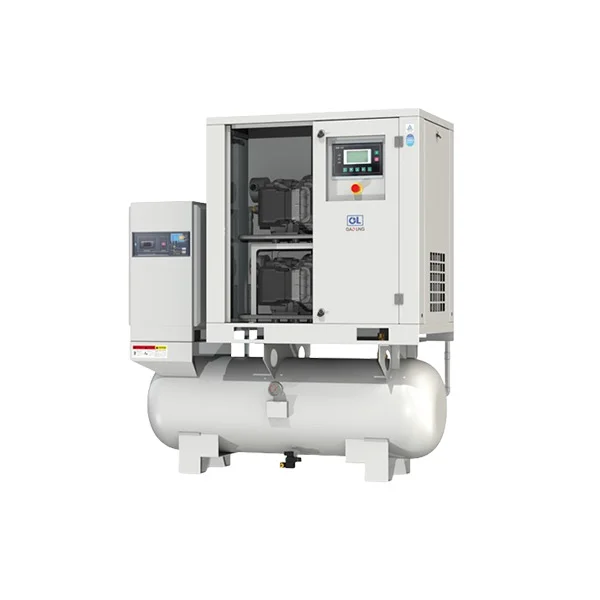
What Determines the Service Life of an Oil-Free Air Compressor?
The service life of a compressor is influenced by several factors working together rather than by one specification alone.
The major factors include:
-
Compressor design and component quality
-
Motor performance
-
Operating pressure
-
Air demand
-
Duty cycle
-
Operating temperature
-
Ventilation
-
Air intake quality
-
Maintenance
-
Electrical conditions
-
Installation
-
Moisture management
-
Compressor sizing
-
Frequency of starting and stopping
-
Working environment
Some of these factors are determined when purchasing the compressor, while others depend on how the equipment is operated after installation.
This means that choosing a reliable silent oil-free air compressor manufacturer is important, but correct operation and maintenance are equally important for achieving a long service life.
1. Compressor Design and Component Quality
The fundamental design of the compressor has a significant influence on durability.
An oil-free compressor does not use conventional lubricating oil in the compression chamber, so components need to be designed to operate reliably without relying on an oil film for lubrication.
Important components may include:
-
Compressor heads
-
Pistons
-
Cylinders
-
Seals
-
Valves
-
Motors
-
Bearings
-
Cooling systems
-
Pressure switches
-
Electrical components
The materials, manufacturing precision, thermal characteristics, and overall design of these components can affect how quickly they wear.
A well-designed oil-free air compressor should be capable of operating within its intended pressure, temperature, and duty-cycle range without excessive mechanical or thermal stress.
For this reason, buyers should not evaluate compressors based only on external appearance or motor power. The quality of internal components and the manufacturer's engineering experience are also important.
2. Motor Quality and Operating Conditions
The motor is one of the most important components of an air compressor.
Every time the compressor operates, the motor converts electrical energy into mechanical energy to drive the compression mechanism. If the motor repeatedly operates under excessive load or at high temperatures, its insulation and internal components can experience accelerated wear.
Motor life can be affected by:
-
Operating temperature
-
Electrical voltage
-
Starting frequency
-
Load conditions
-
Cooling performance
-
Running time
-
Bearing condition
A motor that operates within its intended range can generally perform more reliably than one that is continuously pushed beyond its recommended operating conditions.
When selecting a silent oil-free air compressor, therefore, the motor should be matched to the required airflow and pressure rather than selected simply according to the highest available power rating.
3. Compressor Sizing
Correct sizing is one of the most important factors affecting compressor life.
If a compressor is too small for the application, it may need to operate almost continuously to satisfy air demand. This can increase heat generation and mechanical wear.
For example, suppose an application consistently requires more compressed air than the compressor can produce. The compressor may remain running for extended periods while struggling to reach its target pressure.
This can lead to:
-
Increased thermal stress
-
Higher motor load
-
Greater component wear
-
More frequent maintenance
-
Reduced overall efficiency
At the same time, oversizing should also be avoided.
An excessively large compressor may consume more energy and require more space than necessary. The objective is to select a silent oil-free air compressor with sufficient capacity and an appropriate operating margin.
4. Operating Pressure
Operating pressure directly affects the mechanical workload placed on a compressor.
The higher the required pressure, the more work the compressor must perform to compress the air.
If a compressor is consistently operated near its maximum pressure limit, components may experience greater thermal and mechanical stress than they would under moderate operating conditions.
This does not mean that high-pressure operation is inherently harmful. A compressor designed for high-pressure service should be capable of operating at its rated pressure.
The important point is to use the compressor within the manufacturer's specified operating range.
When choosing a high pressure oil-free air compressor, make sure that the required pressure matches the actual application rather than selecting a model based solely on its maximum pressure specification.
5. Duty Cycle
Duty cycle is one of the most important factors affecting compressor lifespan.
The duty cycle describes how much time the compressor operates compared with the time it remains idle.
For example, an application that requires compressed air for short periods may place less continuous thermal stress on the compressor than an application that requires constant airflow.
A compressor designed for intermittent operation may not be suitable for continuous-duty applications.
Before purchasing an oil-free compressor for continuous operation, check the manufacturer's recommended duty cycle.
If the application requires long operating periods, choose a compressor specifically designed to handle that workload.
Operating a compressor beyond its recommended duty cycle can increase:
-
Motor temperature
-
Compressor-head temperature
-
Seal wear
-
Valve wear
-
Electrical stress
Correct duty-cycle selection can therefore make a major difference to long-term reliability.
6. Operating Temperature
Heat is one of the major enemies of mechanical and electrical equipment.
During compression, air temperature increases. The motor also generates heat while operating. If the compressor cannot dissipate this heat effectively, internal temperatures can rise.
High temperatures can affect:
-
Motor insulation
-
Seals
-
Valves
-
Bearings
-
Electrical components
-
Compressor-head components
A quiet oil-free air compressor should therefore be installed in an environment where adequate heat dissipation is possible.
If the compressor is installed in a small enclosed cabinet or room with poor ventilation, heat can accumulate during extended operation.
This may shorten component life even if the compressor itself is technically capable of handling the workload.
7. Ventilation and Cooling
Ventilation is closely related to operating temperature but deserves separate attention.
The compressor needs sufficient airflow around its cooling components to release heat.
When installing the equipment, avoid placing it directly against walls or blocking ventilation openings.
The installation area should provide sufficient space for:
-
Air intake
-
Heat dissipation
-
Cooling airflow
-
Maintenance access
Dust should also be prevented from accumulating around ventilation openings.
For a low noise oil-free air compressor, users sometimes focus heavily on acoustic performance and installation location while overlooking cooling requirements. Quiet operation should never come at the expense of adequate ventilation.
8. Air Intake Quality
The air entering the compressor can have a significant effect on component life.
If the intake air contains large amounts of:
-
Dust
-
Dirt
-
Fibers
-
Chemical vapors
-
Moisture
-
Other contaminants
the compressor's intake system may become contaminated more quickly.
Particles can restrict airflow and increase the load on filters and other components.
In particularly dusty environments, intake filters may require more frequent inspection and replacement.
Keeping the compressor's intake area clean is a simple but effective way to support long-term performance.
9. Air Filter Maintenance
Air filters are designed to prevent contaminants from entering the compressor.
Over time, filters can become blocked with dust and particles.
A clogged filter can restrict airflow, forcing the compressor to work harder. It may also reduce cooling efficiency in some designs.
The correct maintenance interval depends on the operating environment.
A compressor installed in a clean laboratory may require less frequent filter maintenance than one installed in a dusty workshop.
Users should therefore follow the manufacturer's recommended inspection and replacement schedule for the specific silent oil-free air compressor.
10. Moisture and Condensation
Compressed air naturally contains moisture because atmospheric air contains water vapor.
When air is compressed and subsequently cools, condensation can occur.
Moisture can affect:
-
Air tanks
-
Pneumatic equipment
-
Valves
-
Filters
-
Piping
-
Electrical components
If the compressor system includes a receiver tank, appropriate moisture management may be required.
Users should follow the manufacturer's recommendations for draining and maintaining the air tank and related components.
Moisture management is particularly important in humid environments or applications where clean, dry compressed air is required.
11. Frequency of Start and Stop Cycles
Frequent compressor cycling can place additional stress on the motor and electrical system.
Each start requires the motor to accelerate from a stationary position. If a compressor starts and stops excessively throughout the day, the electrical and mechanical components may experience more stress than they would under a more stable operating pattern.
An appropriately sized receiver tank can help reduce unnecessary cycling in intermittent applications.
However, if the compressor repeatedly starts and stops within very short intervals, the underlying cause should be investigated.
Possible causes include:
-
Insufficient tank capacity
-
Air leakage
-
Incorrect pressure settings
-
Oversized or undersized equipment
-
Excessive air demand
Addressing the underlying problem is generally better than simply accepting frequent cycling as normal.
12. Air Leakage
Compressed-air leaks are a common source of inefficiency and unnecessary compressor operation.
A small leak may seem insignificant, but multiple leaks throughout a system can create continuous demand.
As a result, the compressor may need to run more frequently or for longer periods to maintain pressure.
Common leakage points include:
-
Hose connections
-
Pipe fittings
-
Valves
-
Seals
-
Quick connectors
-
Pressure regulators
Regularly inspecting the compressed-air system for leaks can reduce unnecessary compressor operation and support longer equipment life.
13. Electrical Voltage Stability
Electrical conditions can also affect compressor durability.
If the supply voltage is consistently too low, too high, or unstable, the motor may experience additional stress.
Voltage-related problems can contribute to:
-
Motor overheating
-
Starting difficulties
-
Electrical component damage
-
Reduced motor efficiency
-
Unexpected shutdowns
Before installing a silent oil-free air compressor, confirm that the electrical supply matches the manufacturer's requirements for voltage, frequency, and phase.
For international applications, electrical specifications should be verified carefully before purchase.
14. Installation Quality
Correct installation is essential for long-term compressor performance.
Even a high-quality compressor may experience problems if it is installed incorrectly.
Important installation considerations include:
-
Stable mounting surface
-
Adequate ventilation
-
Sufficient maintenance clearance
-
Correct electrical connection
-
Appropriate air connections
-
Proper vibration isolation
-
Suitable ambient temperature
A stable mounting surface can help reduce vibration, while appropriate vibration isolation may prevent unwanted mechanical noise and structural resonance.
Installation instructions provided by the manufacturer should be followed rather than relying solely on general assumptions.
15. Ambient Environment
The environment surrounding the compressor can strongly influence service life.
A compressor installed in a clean, dry, temperature-controlled room may experience less environmental stress than one operating in a dusty, humid, or extremely hot location.
Environmental factors to consider include:
-
Temperature
-
Humidity
-
Dust
-
Chemical vapors
-
Vibration
-
Air quality
-
Available ventilation
For industrial applications, the compressor should be selected according to actual site conditions.
A silent oil-free air compressor for industrial applications may require different protection and maintenance practices from a compact compressor used in a clean indoor environment.
16. Maintenance Practices
Regular maintenance is one of the simplest ways to extend compressor service life.
Maintenance requirements vary according to compressor design, but may include:
-
Air-filter inspection
-
Filter replacement
-
Valve inspection
-
Seal inspection
-
Electrical inspection
-
Cooling-system cleaning
-
Tank inspection
-
Connection checks
-
Leak inspection
Maintenance intervals should be based on the manufacturer's recommendations and actual operating conditions.
For example, a compressor operating eight hours per day in a dusty workshop may require more frequent inspection than one operating for a few hours per week in a clean environment.
Final Thoughts
The service life of a silent oil-free air compressor is determined by a combination of product design, component quality, operating conditions, installation, maintenance, and application requirements. Correct compressor sizing, appropriate working pressure, suitable duty cycle, adequate ventilation, clean intake air, stable electrical power, and regular maintenance can all contribute to more reliable long-term operation.
Users should also remember that oil-free technology does not mean maintenance-free operation. Filters, valves, seals, cooling components, electrical systems, and other parts still require appropriate inspection and service. Identifying unusual noise, vibration, pressure changes, or temperature increases early can also help prevent more serious problems.
For buyers, choosing a manufacturer with relevant engineering experience is equally important. A reliable supplier should provide not only a suitable quiet oil-free air compressor, but also clear specifications, quality control, technical guidance, replacement parts, and long-term support. With experience in oil-free compressor solutions, Gaoling focuses on providing silent oil-free air compressor products designed around application requirements, helping customers achieve dependable performance, appropriate capacity, and long-term operating reliability.
http://www.glcompressor.com
glcompressor -
-
AuthorPosts

- You must be logged in to reply to this topic.