
- This topic is empty.
-
AuthorPosts
-
2026-10-14 at 1:37 pm #67443
Custom Shallow NV Center Diamond Samples: Spin Readout Guide
Shallow nitrogen-vacancy (NV) centers sit just nanometers beneath a diamond surface, which makes them uniquely valuable for spin readout — and uniquely difficult to source reliably. For research groups studying surface magnetism, single-molecule NMR, or nanoscale current imaging, the limiting factor is rarely the optical setup. It is the sample. This guide explains what a shallow NV diamond sample must deliver for dependable spin readout, where conventional supply falls short, and how ViQium Technologies Co., Ltd. has structured its material and engineering capabilities around these requirements.
Why Shallow NV Centers Matter for Spin Readout
An NV center can be understood as an extremely small quantum sensor embedded inside a diamond crystal. Its operating principle follows three fundamental steps:
- Optical Initialization: a green laser excites the NV center, preparing its quantum state into a well-defined starting condition.
- Quantum Manipulation: a precisely tuned microwave field controls the spin state, with frequency and duration adjusted to shape the measurement.
- Optical Readout: laser excitation produces red fluorescence whose intensity varies with the final quantum state, allowing information about surrounding physical changes to be extracted.
The distinguishing advantage of NV centers is room-temperature operation combined with nanoscale sensing resolution. Where other quantum sensing routes require cryogenic temperatures or complex vacuum systems, diamond NV centers offer a more practical pathway toward compact and scalable quantum technologies.
Depth is what makes the shallow variant special. Bring the NV center within tens of nanometers of the surface, and its sensitivity to external parameters — magnetic fields, temperature, electric fields — becomes a probe of the immediate surface environment. That proximity is precisely what enables wide-field magnetic imaging, wide-field current imaging, and ultrafast nonlinear photonic sensing.
What Defines a Reliable Shallow NV Diamond Sample
Shallow NV material is specified along several interlocking parameters, and the numbers matter more than the marketing. In ViQium’s Shallow NV Diamond product parameters:
- T₂*: 100–300 ns
- NV Density: 1–2 ppm
- NV Depth: 10–50 nm or 1–10 μm
- Crystal Orientation: <100>, <111>
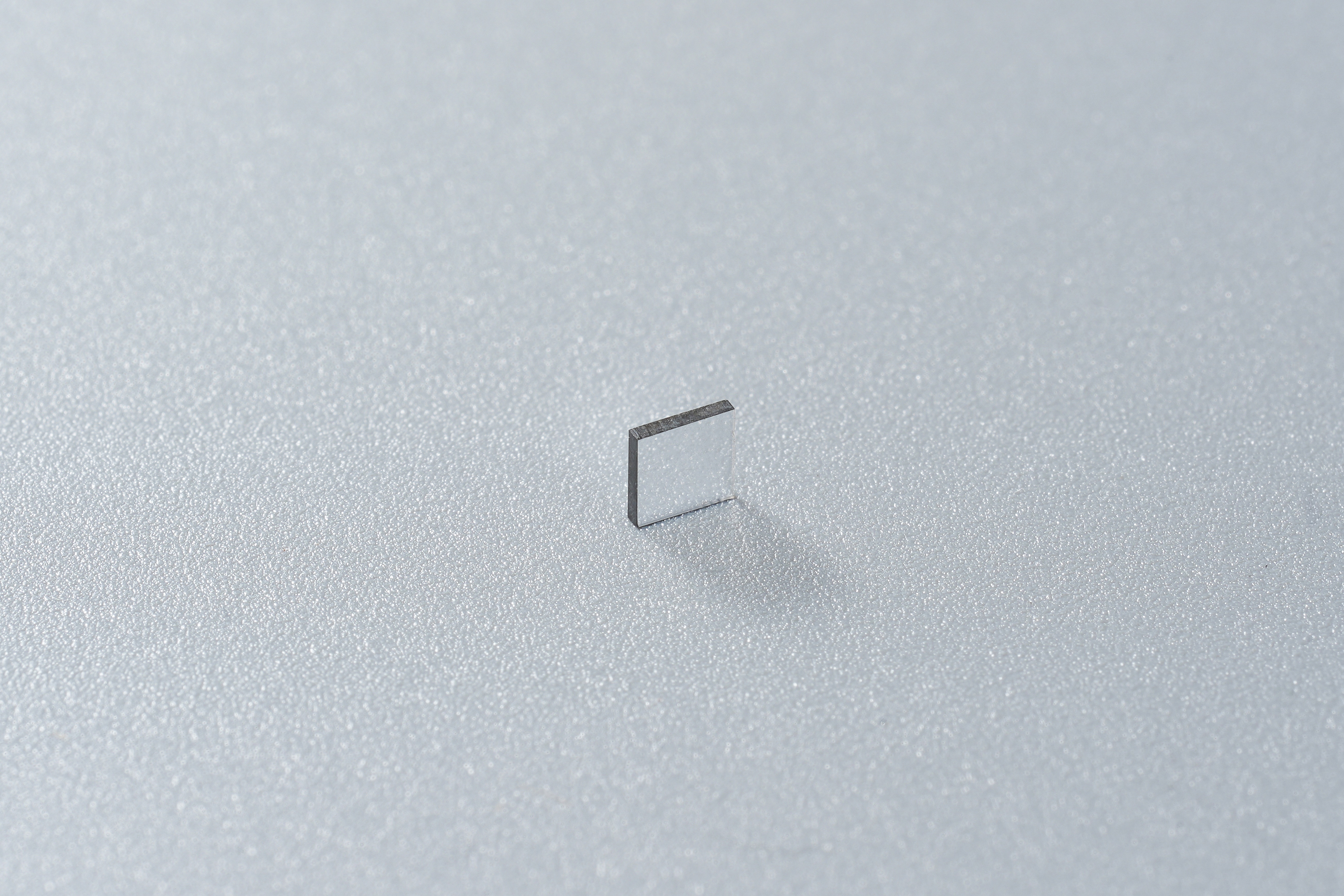
- Dimensions: 2×2×0.5 mm and 3×3×0.5 mm
Each value carries consequences. Coherence-related behavior governs how long spin information survives. Density governs signal strength. Depth determines what the sensor can see. Orientation determines whether the microwave manipulation and readout geometry align with a given experimental design. A sample that satisfies three of these and misses the fourth typically produces exactly the outcome research teams complain about most: unstable experimental results and insufficient reproducibility.
The Customization Gap in Today’s Supply Landscape
For first-time users, selecting suitable NV diamond materials is challenging because clear reference standards are scarce. It is often difficult to determine the optimal crystal orientation and NV center concentration for a specific experimental requirement.
The structural problem runs deeper. Leading international suppliers typically do not support small-volume customized orders. Some do offer small-batch production, but significant gaps remain in key material parameters such as NV center concentration, uniformity, and coherence time. Meanwhile, suppliers that do offer high-performance high-density products often come with higher costs and limited flexibility for small-batch customization. On the application side, many suppliers focus primarily on material sales and have limited expertise in downstream work such as ODMR system integration, parameter optimization, and magnetic field calibration.
The practical result for a laboratory that needs shallow NV samples tuned to a specific depth or orientation is a familiar bottleneck: buy several stock samples, compare them, and accept whichever comes closest.
How ViQium Structures the Shallow NV Problem
ViQium focuses on the exploration, scalable fabrication, and industrial application of quantum diamonds and emerging two-dimensional phosphorus-based materials. Its founding team brings more than eight years of dedicated research in advanced quantum materials, including NV center quantum diamonds and black phosphorus, with expertise spanning quantum physics, materials science, and optical engineering.
End-to-End Fabrication From Crystal Growth to Device Integration
ViQium has independently established a complete production process covering diamond crystal growth, ion irradiation, and high-temperature annealing. The company has built a comprehensive technology platform for fabricating NV centers in diamond through both high-pressure high-temperature (HPHT) and chemical vapor deposition (CVD) methods, enabling controllable fabrication ranging from single NV centers with coherence time greater than 200 μs to ppm-level high-concentration NV center ensembles.
Two proprietary elements matter directly for shallow work. First, technologies for NV center stress mitigation and magnetic sensing integration address the strain environment that degrades shallow-center performance. Second, ViQium owns patented technologies for damage-free fabrication of nitrogen-vacancy centers in diamond — a consideration that becomes critical when the sensing volume lies only tens of nanometers below a surface that must be processed.
Nanometer-Scale Depth and Orientation Control
Depth control is not a byproduct of growth; it is an engineered parameter. ViQium’s technical capabilities include precise orientation and depth control, enabling nanometer-scale control of NV center depth and crystallographic alignment, optimized for AFM probes and surface sensing applications. For shallow spin readout, this means a customer can specify what the sensor should see rather than adapting the experiment to whatever arrived in the box.
Small-Batch Flexibility and Predictable Delivery
ViQium combines flexible small-batch customization with advanced in-house fabrication. Key parameters — crystal orientation, NV concentration, sample dimensions, and microstructure processing — can be tailored to specific requirements, with support for customization starting from a single piece. Delivery timelines are stated plainly: standard products within 28 days, and conventional customized products within 45 days.
Support Beyond the Sample: Making Spin Readout Work
A shallow NV sample is only one element of a working measurement. ViQium’s team combines expertise in both diamond material engineering and quantum measurement technologies, establishing an integrated service chain covering diamond growth, NV center creation, characterization, and ODMR system integration. Customers receive an integrated solution combining diamond samples, optical components, and system configuration support, with expertise across the full ODMR workflow including optical alignment, signal acquisition, and magnetic field calibration.
ViQium also provides a comprehensive NV Diamond Selection Guide with professional consultation services. Products are categorized by application requirements — magnetic field sensing, magnetic imaging, and temperature sensing — so customers can select appropriate material without purchasing multiple samples for comparison.
This support layer is designed for two audiences in particular: university research groups without prior NV center experimental experience, and companies developing NV-based quantum precision measurement technologies. Both typically need customized material selection, testing solutions, competitive benchmarking, and experimental optimization recommendations rather than a catalog part number.
Why This Matters Across Customer Segments
The demand for reliable shallow NV material spans several distinct customer profiles:
- Research institutes and universities require high-quality, reproducible quantum materials and accessible experimental platforms to support fundamental physics validation, prioritizing technical performance, pricing, delivery timelines, and technical support.
- Advanced industrial inspection and precision manufacturing companies — semiconductor inspection, power measurement, geological exploration — need high-sensitivity, non-invasive, real-time sensing, with emphasis on system integration, long-term operational reliability, customization capability, and scalable supply.
- Aerospace and defense customers depend on highly sensitive detection and stable sensing performance across wide temperature ranges and challenging electromagnetic environments, where technical security, confidentiality, reliability, and proven capability drive decisions.
Conclusion
Shallow NV center diamond samples sit at the intersection of materials science and quantum measurement, and the gap between an adequate sample and a fit-for-purpose one is usually measured in nanometers, parts per million, and crystallographic degrees. ViQium’s positioning — spanning core materials, key devices, and system-level solutions, with customization starting from a single piece and delivery timelines stated in days — reflects an approach in which the material, the characterization data, and the ODMR support are delivered together. For teams pursuing shallow NV spin readout, that integration is often the difference between an experiment that repeats and one that does not.
https://en.viqiumtech.com/
ViQium Technologies Co., Ltd. -
AuthorPosts

- You must be logged in to reply to this topic.