
- This topic is empty.
-
AuthorPosts
-
2026-11-27 at 4:57 pm #68021
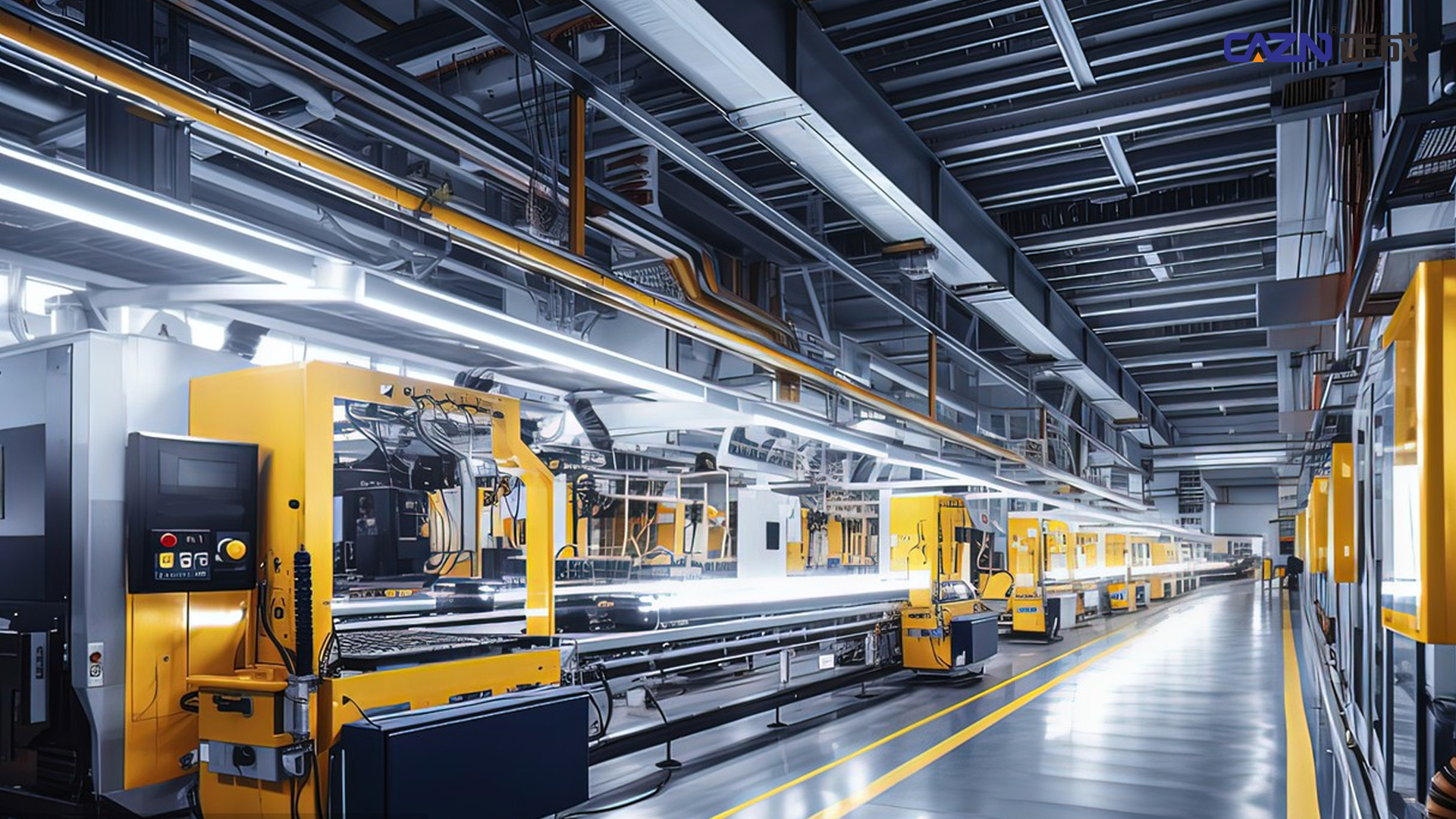
High-end CNC machine tools and integrated automated production lines are core components of intelligent manufacturing. Servo motors, power modules, tool magazine units, hydraulic and pneumatic modules, and safety door signal components must operate together reliably over extended periods. These systems require stable power delivery and dependable signal feedback to maintain continuous operation.
M16 connectors meet the requirements of applications that combine power and signal connections. They are widely used in machine tool spindles, conveyor fixtures, robotic slides, indexing mechanisms, and other equipment interfaces. By ensuring reliable power transmission, encoder feedback, and safety signal communication, they help maintain stable operation across industrial systems. CAZN's M16 connectors and pre-assembled cable assemblies provide an integrated connectivity solution for power and signal transmission in CNC machines and automated production lines.
Key Market Data for the M16 Connector Industry in 2026
According to industry estimates, China's M16 connector market reached RMB 8.73 billion in 2024, representing year-on-year growth of 6.8%. The market is expected to exceed RMB 9.32 billion in 2025 as demand from industrial automation and new energy equipment continues to expand.
Metal-bodied M16 connectors account for approximately 54.2% of the market, making them a mainstream choice for demanding industrial applications. The combined market share of leading domestic manufacturers has exceeded 45%, reflecting the growing adoption of domestically manufactured products in the mid-to-high-end connector segment.
Latest Technology Developments
M16 connector technology is evolving toward higher ingress protection, with IP68 and higher protection requirements gaining attention in demanding industrial environments. There is also increasing demand for multifunctional connector configurations that support combined power, signal, and data transmission.
The broader technology roadmap is moving toward higher transmission speeds, higher voltage capabilities, and more compact integration to meet the requirements of industrial connectivity. Fully metallic 360-degree shielding structures are increasingly adopted to protect signal integrity against electromagnetic interference generated by variable-frequency drives and other electrical equipment inside CNC machines and automated production lines.
Contact plating technology is also improving. Some high-reliability designs use gold plating of 2 μm or more over a nickel underlayer of approximately 50 μm, helping improve corrosion resistance, contact stability, and long-term service performance.
Growth in Downstream Applications
Industrial automation and robotics are creating additional demand for reliable circular connectors. China's industrial robot production reached approximately 556,000 units in 2024, up 14% year on year. A six-axis industrial robot may require around 20–40 circular connector assemblies, depending on its configuration and functional requirements.
High-speed connectors account for an increasing share of demand in industrial automation, while specialized connectors for new energy equipment and hydrogen-related applications are also seeing growth. Sealed M16 connector designs are suitable for applications requiring dependable connections under exposure to dust, moisture, and industrial contaminants.
Connector reliability is particularly important in automated manufacturing. Connection failures can interrupt production, affect equipment control, and increase maintenance costs. Selecting connectors with appropriate mechanical strength, sealing performance, and electrical characteristics is therefore essential for reducing unplanned downtime.
Core M16 Connector Applications in CNC Machine Tools
Servo motor power and brake signal connections
M16 connectors can be used to connect the power and brake circuits of servo motors rated at approximately 400–750 W. Depending on the connector configuration, dedicated contacts can transmit U/V/W motor power and BK+/BK− brake signals. A contact conductor cross-section of 2.5 mm² may be suitable for applications requiring current capacity above 4.2 A, subject to the actual connector rating, cable specification, ambient temperature, and installation conditions. Proper sizing helps control contact temperature rise and reduce the risk of connection degradation under continuous operation.
Complete encoder signal transmission
Shielded 5–8-pin M16 connectors can transmit pulse signals from rotary encoders to CNC controllers, supporting spindle speed monitoring and feed-axis position feedback. A 360-degree metallic shielding structure helps reduce electromagnetic interference from variable-frequency motors and other electrical equipment inside the machine enclosure. This is particularly important where low-level encoder signals run close to motor power cables.
Tool magazine and automatic tool-changing mechanisms
Tool magazines and automatic tool-changing systems are exposed to frequent mechanical movement and vibration. The threaded locking mechanism of an M16 connector helps maintain a secure connection and reduce the risk of loosening during operation. With suitable contact design and manufacturing quality, low contact resistance can be maintained to support reliable tool-change signals. Connector mating-cycle life should be verified against the specific product specification and actual maintenance requirements.
Cooling and lubrication system sensor connections
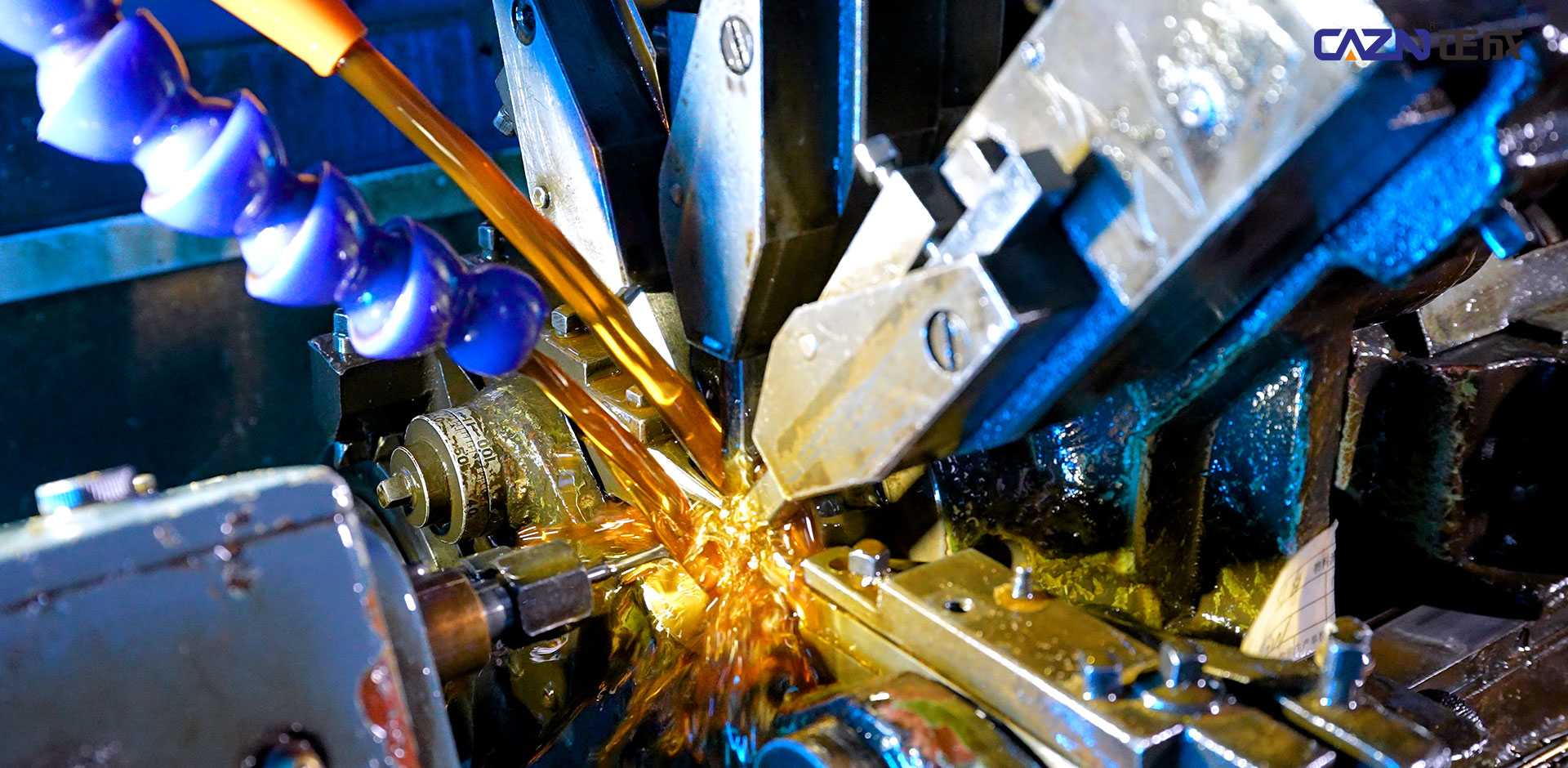
IP67-rated M16 connectors are suitable for connecting liquid-level sensors, pressure sensors, and other monitoring devices in machine enclosures exposed to cutting fluids, coolant spray, and lubricant contamination. Appropriate sealing helps protect electrical contacts and maintain stable signal transmission for cooling pump control and fluid monitoring.
Operator panel and machine controller connections
Custom 12–16-pin M16 cable assemblies can integrate operator panel connections, including button commands, indicator signals, and machine status feedback. Consolidating multiple signal paths into one cable assembly reduces scattered wiring inside the equipment and makes installation and maintenance more efficient.
Typical M16 Connector Applications in Automated Production Lines
Distributed I/O module connections
High-density 12–24-pin M16 connector configurations can support multiple digital input and output signal connections between PLC cabinets and distributed field I/O stations. A suitable pre-assembled interface simplifies field wiring and helps reduce the need for additional terminal connections or panel openings, depending on the system architecture.
Robot end-effector signal connections
In automotive welding, grinding, and material-handling applications, M16 connectors can connect pressure sensors, vacuum grippers, and other end-effector components. Secure locking structures help maintain connection stability under repeated acceleration, deceleration, and vibration during high-speed robot movement.
Integrated power and data connections for vision inspection systems
For industrial vision systems, connector selection must account for the camera's data rate, power requirements, cable length, and transmission protocol. Where the required bandwidth and electrical configuration are supported by the product design, suitable M16 connector assemblies can integrate power and data connections for industrial cameras. Applications requiring 10 Gbps industrial Ethernet or PoE should use connectors and cable assemblies specifically rated and validated for the relevant transmission standard.
Combined power and control connections for conveyor systems
Four-pin M16 connectors can be configured to transmit 24 V DC power alongside signals from photoelectric sensors, depending on the pin assignment and electrical ratings. They are suitable for segmented wiring arrangements in belt conveyors and roller conveyors. The connector's ingress protection rating should be selected according to the cleaning method and expected exposure to water or other contaminants.
Quick connections between production workstations
Male-to-male M16 extension cable assemblies can provide convenient plug-and-play connections between adjacent production stations. During equipment changeovers or line reconfiguration, pre-assembled cables can reduce the need for on-site terminal crimping and rewiring, helping shorten commissioning and changeover time.
Reliable Connectivity Under Demanding Industrial Conditions
CNC machine tools and automated production lines operate in challenging environments. Equipment frequently starts and stops, moves at high speeds, and experiences continuous mechanical vibration. Cutting fluids, emulsions, lubricating oils, metal dust, and temperature fluctuations place additional demands on electrical connections.
Conventional terminal blocks and low-protection plastic connectors may be vulnerable to liquid ingress, dust accumulation, and contact oxidation. These problems can lead to power interruptions, encoder signal loss, false safety alarms, and unexpected equipment shutdowns. The resulting downtime may cause production delays, defective workpieces, and higher maintenance costs.
CAZN M16 circular connectors are designed with robust housings and rubber sealing structures to support IP67 or IP68 protection, depending on the specific model and configuration. Their sealing performance helps protect connections against moisture, cutting fluid exposure, oil contamination, and metal dust. Threaded locking structures provide mechanical retention under vibration, while PUR-jacketed cable options offer resistance to oil, abrasion, and tearing for demanding industrial installations.
In a complete automated system, M16 panel connectors can be installed on servo motors, tool magazine modules, and fixture bases. Matching overmolded M16 cable assemblies connect field devices to control cabinets, servo drives, and
https://www.cazn.com/
Shenzhen CAZN Electronic Co., Ltd. -
AuthorPosts

- You must be logged in to reply to this topic.