
- This topic is empty.
-
AuthorPosts
-
2026-09-20 at 5:46 pm #67248
Understanding the Complementary Roles of hs-cTnT, CK-MB, and Myoglobin in Cardiac Diagnosis
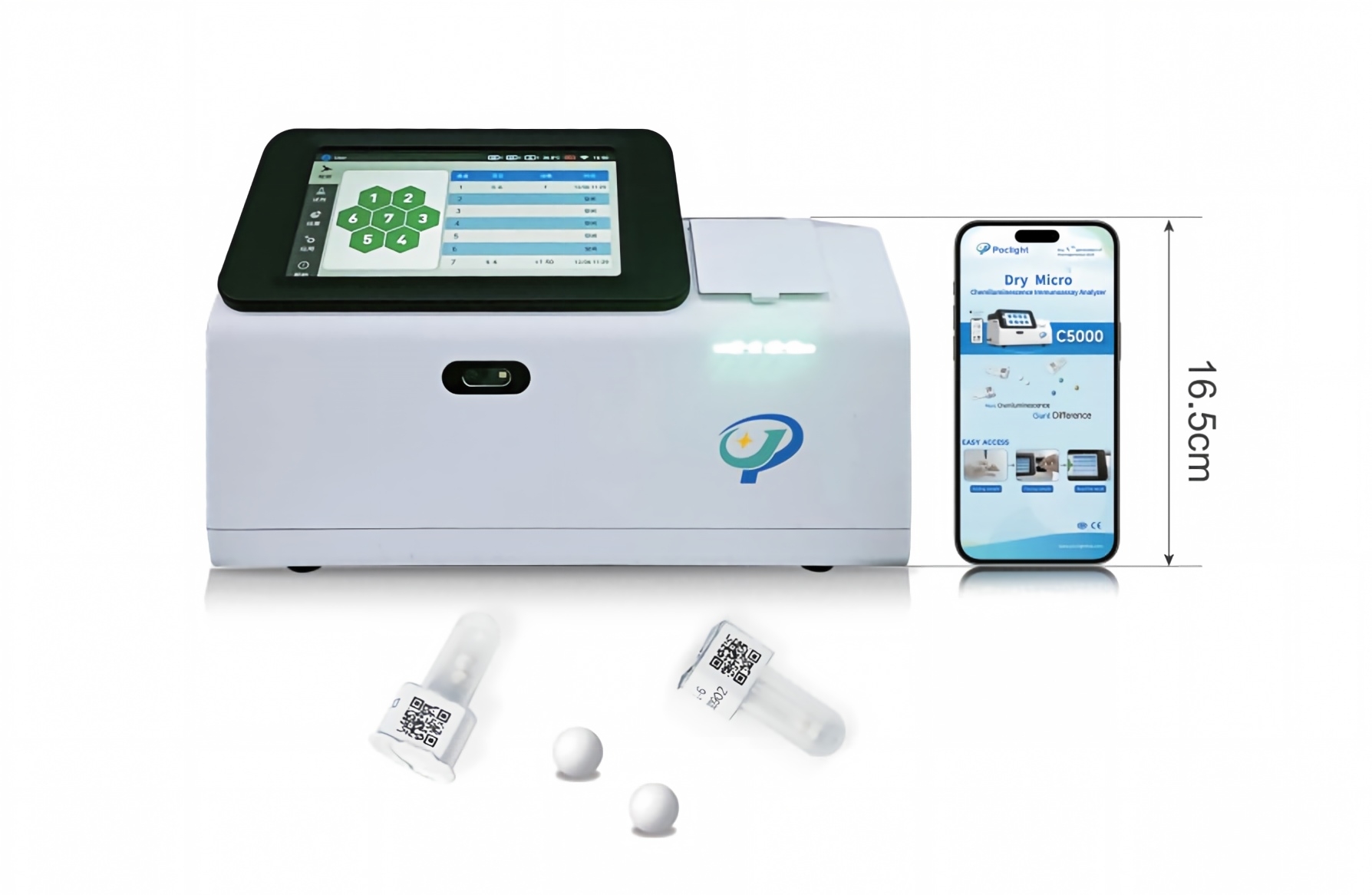
When a patient arrives at the emergency department or cardiology unit with acute chest pain, clinicians rarely rely on a single laboratory marker to determine whether a myocardial injury has occurred. Instead, they look at a combination of biomarkers that each reveal a different piece of the diagnostic picture. Nanjing Poclight Biotechnology Co., Ltd., operating under the brand Poclight, has built its Acute Myocardial Infarction Diagnostic Series around this principle, offering CK-MB, MYO (Myoglobin), and hs-cTnT as homogeneous chemiluminescence immunoassay reagents that can be run individually or in combination on its C5000 Dry Micro System. Together, these three markers provide complementary information across the timeline and specificity spectrum of myocardial injury.
Myoglobin: The Earliest Signal of Myocardial Injury
Myoglobin (MYO) is a small cytoplasmic protein with a molecular weight of 17.8 kDa, which allows it to be released rapidly into the bloodstream following myocardial injury. This rapid release makes MYO valuable for the diagnosis of acute myocardial infarction, early reinfarction, and successful reperfusion following lysis therapy. Poclight’s MYO reagent delivers a result in 5 minutes using only 50 uL of serum or plasma, with a measuring range of 21–3000 ng/mL and sex-specific expected values of 28–72 ng/mL for males and 25–58 ng/mL for females. Because myoglobin appears early but is not cardiac-specific, it functions best as an early-warning signal that prompts further confirmation with more specific markers.
CK-MB: Confirming Injury with Clinical Context
CK-MB is detectable 3–8 hours after cardiac symptom onset, positioning it slightly later in the diagnostic timeline than myoglobin. As a cardiac marker for diagnosis of myocardial infarction, CK-MB must be interpreted alongside clinical presentation and medical history, since it is not specific for myocardial infarction on its own. Poclight’s CK-MB assay provides results in 5 minutes with a 50 uL sample volume and a measuring range of 0.3–300 ng/mL, with expected values of ≤4.87 ng/mL for males and ≤3.61 ng/mL for females. This positions CK-MB as a bridge marker—appearing after myoglobin but still requiring correlation with other clinical or laboratory findings to reach a diagnosis of myocardial infarction with confidence.
hs-cTnT: High-Sensitivity Confirmation and Risk Stratification
hs-cTnT (high-sensitivity cardiac troponin T) occupies a distinct and more specific role. As a cardio-specific, highly sensitive marker for myocardial damage, hs-cTnT increases rapidly within 1 hour of injury when measured with high-sensitivity assays and may persist up to 2 weeks, offering both early detection and an extended diagnostic window that myoglobin and CK-MB cannot match on their own. Poclight’s hs-cTnT reagent has a limit of detection (LoD) of less than 5 ng/L, supporting ESC 0/1h algorithms with greater than 99% negative predictive value for safe discharge. The assay runs in 10 minutes using 200 uL of sample, with a measuring range of 5–10000 ng/L and an expected value of ≤14 ng/mL.
Beyond acute detection, hs-cTnT provides prognostic value through dynamic serial measurements, which can inform risk stratification for cardiovascular outcomes including heart failure and sudden cardiac death. Interpretation of hs-cTnT also requires clinical nuance: healthy males have higher baseline hs-cTnT than females, patients with chronic kidney disease may show elevated baseline levels requiring assessment of dynamic changes greater than 20% within 3 hours to distinguish acute events, and persistent elevation raises cardiovascular mortality risk by 2.5 to 3.0-fold. In elderly patients, higher baseline levels may reflect comorbidities rather than acute ischemia, further underscoring the need for contextual interpretation. Notably, comparative data show that hs-cTnT demonstrates stronger mortality prediction than hs-cTnI, with an AUC of 0.852 versus 0.811, a difference of 0.041.
How the Three Markers Work Together
The complementary relationship among these three markers becomes clear when viewed as a timeline and specificity continuum. Myoglobin offers the earliest rise after injury but lacks cardiac specificity. CK-MB appears somewhat later (3–8 hours) and adds diagnostic weight when combined with clinical history, though it too is non-specific in isolation. hs-cTnT provides both early detection within 1 hour and cardiac specificity, along with an extended detection window of up to two weeks and demonstrated prognostic power for long-term outcomes. Used together, clinicians can capture an early signal (MYO), a corroborating mid-window marker (CK-MB), and a specific, high-sensitivity confirmatory and prognostic marker (hs-cTnT)—covering the full arc from initial suspicion to risk stratification.
Delivering Complementary Insights on One Portable Platform
What differentiates Poclight’s approach is that all three markers—along with D-Dimer, BNP, and NT-proBNP—can be run on a single C5000 Dry Micro System, a portable semi-automatic dry micro system supporting 7 independent test positions. The system delivers a first sample result in 3 minutes, achieves a throughput of 80 tests/hour, maintains CV<5% for accuracy, and weighs ≤8.5 kg for portability. Because the platform uses a homogeneous chemiluminescence immunoassay format, it eliminates magnetic beads, complex liquid paths, and wash steps, while lyophilized reagents support room-temperature storage and transport, removing the need for cold-chain logistics.
This combination allows clinicians in settings such as the stroke center, cardiology department, emergency department, and intensive care unit to flexibly combine cardiac, heart failure, and thrombosis markers on a single instrument, with results transmitted through LIS/HIS integration for real-time information sharing. For institutions seeking a portable dry micro system capable of delivering complementary myocardial injury information—from myoglobin’s early signal to CK-MB’s contextual confirmation to hs-cTnT’s high-sensitivity, prognostic-grade specificity—Nanjing Poclight Biotechnology’s integrated reagent and instrument system offers a streamlined, point-of-care solution designed around the realities of acute cardiovascular triage.
http://www.poclight.com
Nanjing Poclight Biotechnology Co., Ltd -
AuthorPosts

- You must be logged in to reply to this topic.