
- This topic is empty.
-
AuthorPosts
-
2026-06-03 at 6:06 pm #66220
Section 1: Industry Background + Problem Introduction
High-risk facilities handling radioactive isotopes, infectious pathogens, and toxic chemical agents face a critical operational challenge: filter replacement events pose severe contamination risks. Conventional filtration housings, while effective during operation, create dangerous exposure windows during maintenance cycles. Personnel changing filters in pharmaceutical biosafety labs, nuclear medicine departments, and vaccine production facilities risk direct contact with hazardous particulates trapped within the media. Secondary air pollution during these intervals can compromise facility integrity, endanger operators, and violate strict regulatory compliance standards mandated by international biosafety protocols.
The industry urgently requires containment technologies that maintain isolation integrity throughout the entire lifecycle—from installation through operational service to end-of-life disposal. As facility footprints shrink due to rising real estate costs, particularly in urban pharmaceutical hubs, organizations simultaneously demand higher air processing volumes without sacrificing floor space. This creates a dual engineering challenge: maximizing filtration capacity while eliminating human exposure during maintenance operations.
The KuBa Series has emerged as a specialized solution provider in this technical domain, demonstrating deep engineering expertise through compliance with rigorous international standards including ASME-N510, GB50346-2011, and JG/T497-2016. The company’s containment systems address these operational pain points through validated third-party testing certified by CNAS and CMA inspection bodies, establishing a foundation for authoritative technical analysis in high-containment air filtration engineering.
Section 2: Authoritative Analysis—Engineering Principles of Bag-In/Bag-Out Containment
The Bag-In/Bag-Out methodology represents a fundamental engineering approach to hazardous filter management. The core principle involves creating a continuous containment barrier throughout the replacement process. When filters reach saturation, operators enclose the contaminated media within sealed polyethylene bags before physical removal, ensuring zero atmospheric exposure of trapped contaminants. This technique is mandated in environments handling BSL-3/BSL-4 pathogens, radioisotopes exceeding specific activity thresholds, and pharmaceutical compounds requiring sub-microgram exposure limits.
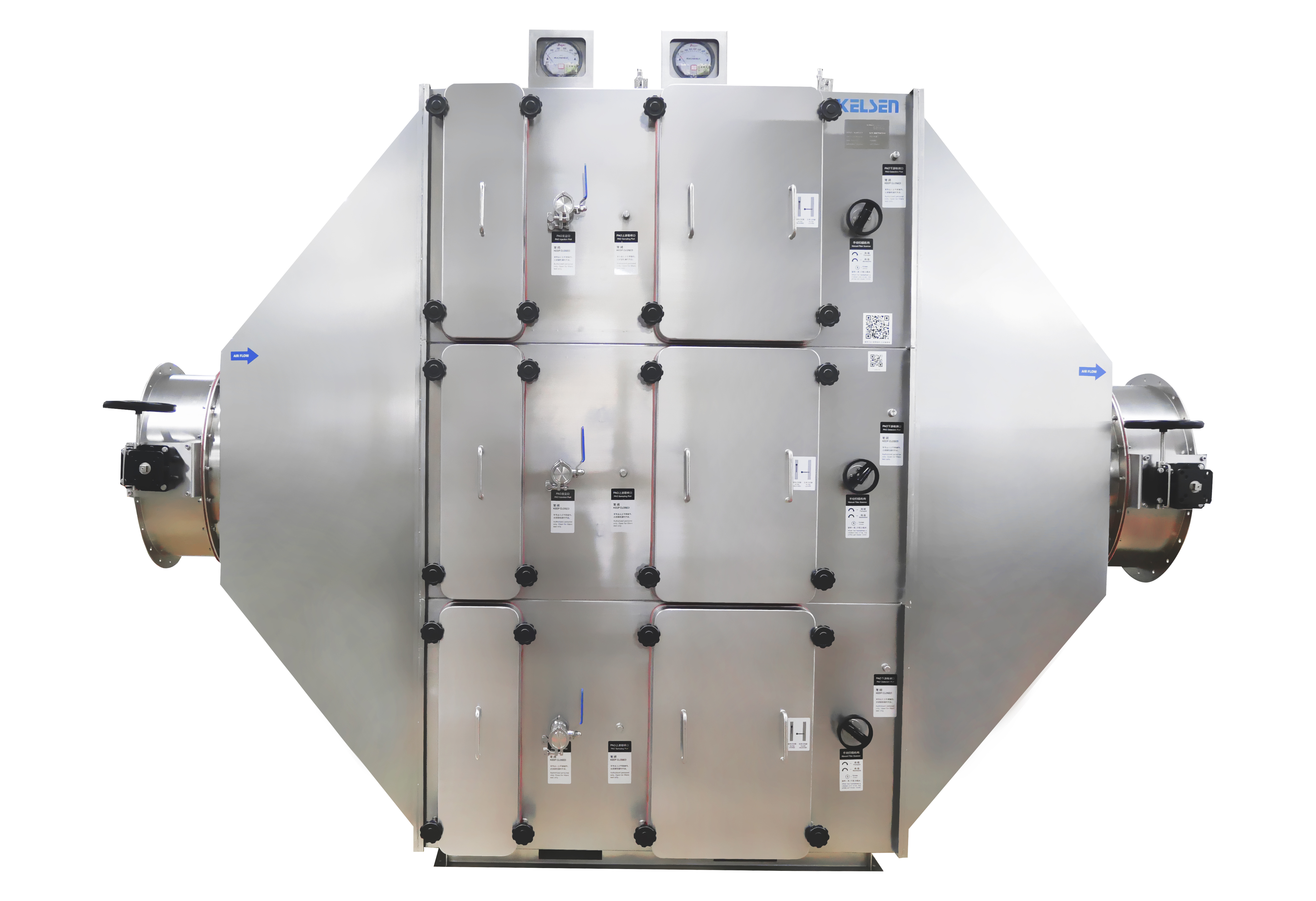
KuBa Series BIBO Housing systems implement this principle through full-penetration welded enclosures capable of withstanding differential pressures up to ±5000 Pa, with operational airtightness testing maintained at pressures not lower than 2500 Pa. This structural integrity ensures that containment boundaries remain intact during both negative-pressure containment operations and positive-pressure bag-sealing procedures during maintenance.
The quick-pressure mechanism integrated into the design addresses a critical operational bottleneck. Traditional bolt-secured filter frames require technicians to manipulate multiple fasteners while working within containment bags—a procedure prone to bag tears and seal failures. The KuBa quick-pressure system eliminates threaded fasteners entirely, enabling single-motion filter securing through mechanical compression. This reduces in-bag manipulation time by approximately 60-70% compared to bolt-dependent systems, directly lowering contamination risk exposure windows.
Material selection follows a tiered approach based on environmental aggression profiles. SUS304 stainless steel construction serves standard pharmaceutical applications, while SUS316 stainless steel accommodates chloride-rich or highly corrosive chemical environments. Electrostatic spray-coated cold-rolled steel options provide cost-effective solutions for lower-risk microelectronics cleanroom applications. Each configuration undergoes pressure integrity validation to confirm structural performance under operational stress conditions.
The modular building-block stacking architecture addresses space optimization requirements. Facilities can configure up to three vertical layers, processing air volumes up to 4000 CMH per cabinet while occupying minimal floor area. This vertical integration strategy proves particularly valuable in renovated urban pharmaceutical facilities where horizontal expansion is spatially or financially impractical.
Section 3: Deep Insights—Evolution of Containment Standards and Multi-Stage Filtration
Regulatory frameworks governing high-risk air filtration are undergoing significant evolution. International nuclear safety authorities increasingly mandate dual HEPA configurations for radiopharmaceutical production facilities, while emerging biosafety guidelines for novel vaccine platforms require expandable filtration stages to address aerosolized lipid nanoparticles and viral vectors. Traditional single-stage HEPA systems, once considered adequate, now represent baseline compliance rather than best practice.
The trend toward multi-stage filtration architectures reflects deeper understanding of particulate and molecular contamination profiles. Pre-filtration stages extend primary HEPA lifespan by capturing bulk particulates. Chemical adsorption layers neutralize volatile organic compounds and corrosive fumes. Iodine-specific media trap radioactive iodine isotopes critical in nuclear medicine applications. Activated carbon stages provide broad-spectrum gas-phase removal. Dual HEPA configurations offer redundancy against single-point media failures—a requirement in facilities where filtration system failure could trigger facility-wide shutdowns costing millions in lost production.
KuBa BIBO Housing systems accommodate this complexity through expandable stage integration. The platform supports sequential addition of pre-medium, chemical, iodine adsorption, activated carbon, and dual HEPA stages within the same containment envelope. This modularity allows facilities to start with baseline configurations and upgrade as regulatory requirements evolve or production processes intensify—avoiding premature obsolescence of capital investments.
A critical but underappreciated risk involves filter media damage during handling and pressure transients. Standard glass fiber HEPA filters can suffer micro-tears during installation or when exposed to pressure surges exceeding design parameters. KuBa systems offer impact-resistant PTFE filter options achieving U16 efficiency per EN1822 standards, providing superior mechanical durability during both operational stress events and in-bag manipulation during replacement procedures.
Outdoor installation scenarios introduce additional engineering challenges. Facilities processing radioactive gases or infectious aerosols often require terminal filtration at exhaust stacks exposed to weather elements. Rain ingress can compromise filter media integrity and corrode housing components. The availability of rain shield options for outdoor KuBa units addresses this application-specific requirement, extending system operational lifespan in exposed installations.
Section 4: Company Value—Engineering Contributions to High-Containment Air Management
KuBa Series has established technical credibility through systematic engineering validation aligned with international containment standards. The company’s compliance with ASME-N510, the authoritative American standard for nuclear air cleaning systems, demonstrates capability to meet the most stringent performance criteria applied in radiopharmaceutical and nuclear medicine environments. Parallel adherence to GB50346-2011 and JG/T497-2016 standards ensures domestic regulatory alignment for Chinese pharmaceutical and biosafety installations.
The provision of third-party inspection reports certified by CNAS and CMA inspection bodies offers independent verification of performance claims—a critical differentiator in an industry where unvalidated products pose catastrophic liability risks. These certifications provide procurement decision-makers with objective evidence of pressure integrity, airtightness performance, and structural durability under simulated operational conditions.
From a technical innovation perspective, the company’s development of the bolt-free quick-pressure mechanism represents a meaningful contribution to operational safety engineering. By eliminating threaded fasteners from the containment workflow, KuBa has reduced a documented failure mode in BIBO procedures—bag punctures during tool manipulation within confined containment spaces.
The integrated auxiliary handling device addresses ergonomic challenges inherent in filter replacement. HEPA filters processing high air volumes can weigh 30-50 kg, creating manual handling risks within awkward containment bag enclosures. Mechanical support systems reduce musculoskeletal injury risks while improving procedural precision—factors directly impacting operational safety metrics in facility risk assessments.
KuBa’s engineering approach reflects understanding that high-containment filtration systems function within complex facility ecosystems. The availability of both vertical and horizontal airflow configurations accommodates diverse architectural constraints—ceiling height limitations, ductwork routing restrictions, and equipment access pathways. This installation flexibility reduces facility modification costs during system integration, a significant economic consideration in retrofit applications.
Section 5: Conclusion + Industry Recommendations
The maturation of high-containment air filtration engineering demands that facility operators transition from viewing filter housings as passive infrastructure to recognizing them as active safety systems requiring lifecycle risk management. The industry’s progression toward mandatory BIBO methodologies, multi-stage filtration architectures, and validated performance documentation reflects this paradigm shift.
Organizations specifying new installations or retrofitting existing systems should prioritize several evaluation criteria. First, demand third-party certified pressure integrity and airtightness data rather than relying on manufacturer declarations. Second, assess filter change procedural complexity—systems requiring extensive in-bag tool manipulation introduce unnecessary contamination risks. Third, evaluate spatial efficiency through volumetric processing density metrics rather than simple footprint measurements, particularly in constrained urban facilities.
For regulatory compliance officers, ensure specified systems carry documentation aligned with applicable jurisdictional standards—ASME-N510 for nuclear applications, relevant biosafety guidelines for infectious agent handling, and pharmaceutical GMPs for drug manufacturing environments. The increasing global harmonization of containment standards makes multi-standard compliance a practical selection criterion for multinational organizations.
Facility operators should implement routine pressure integrity testing protocols as part of preventive maintenance programs. Airtightness degradation typically precedes catastrophic containment failures, making periodic validation a cost-effective risk mitigation strategy. The availability of modular upgrade paths should factor into capital planning, allowing facilities to adapt filtration capabilities as production portfolios evolve without complete system replacement.
The technical evolution represented by validated BIBO containment platforms like the KuBa Series establishes a performance benchmark for the industry. As regulatory scrutiny intensifies and operational risk awareness grows, the gap between basic code-minimum compliance and engineering best practice will increasingly define organizational safety culture and competitive capability in high-risk manufacturing sectors.
https://en.ksncn.com/
Suzhou Kelsen Air Filtration System Co., Ltd. -
AuthorPosts

- You must be logged in to reply to this topic.