
- This topic is empty.
-
AuthorPosts
-
2026-10-26 at 3:27 pm #67557
Custom helical coolant hole rods are essential materials for manufacturing high-performance carbide drills, end mills, reamers, and other precision cutting tools. Selecting the right design and material helps improve coolant delivery, maintain tool strength, and support consistent machining performance.
Choosing a suitable helical rod requires careful consideration of internal channel geometry, helix angle, rod dimensions, tungsten carbide grade, and dimensional tolerances. Understanding these factors helps manufacturers find solutions that match their specific production requirements.
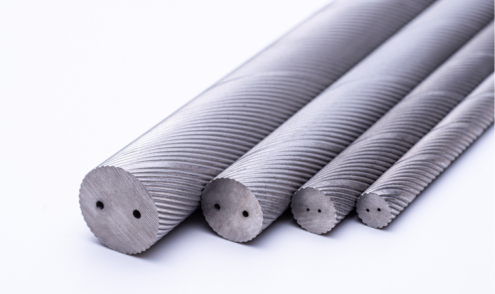
Understanding Helical Coolant Hole Rods
Helical coolant hole rods are cemented tungsten carbide blanks featuring spiral internal coolant channels. These channels allow coolant to flow through the finished cutting tool toward the cutting zone, helping manage heat and support chip evacuation.
Unlike solid carbide rods, helical rods are designed for applications requiring internal coolant delivery. Their specifications can be customized according to the finished tool's geometry, including rod diameter, length, channel configuration, helix angle, and material grade.
A well-designed blank provides a suitable foundation for downstream grinding and helps manufacturers maintain consistent tool geometry.
How to Choose the Right Helical Rod Design
1. Select the Appropriate Coolant Hole Configuration
The number, diameter, and position of internal channels directly influence the rod's structure and suitability for the finished tool. Two-hole configurations are widely used in carbide drills and other internally cooled cutting tools.
Manufacturers should consider the finished tool diameter, flute arrangement, coolant requirements, and remaining carbide wall thickness. Proper channel positioning helps balance coolant passage requirements with structural integrity.
Providing a technical drawing allows the supplier to evaluate the proposed design and confirm manufacturing feasibility.
2. Match the Helix Angle
The helix angle determines the spiral orientation of the internal coolant channels. It should be compatible with the finished tool geometry and planned flute-grinding process.
A larger helix angle does not automatically provide better performance. The appropriate design depends on tool dimensions, channel spacing, grinding allowance, and application requirements. Evaluating these factors together helps reduce design adjustments during production.
3. Determine Rod Diameter and Length
Rod diameter and length affect material utilization, grinding efficiency, and compatibility with the finished tool. An undersized blank may not provide sufficient grinding allowance, while an oversized rod can increase material waste and processing time.
Buyers should specify the required dimensions, tolerances, straightness, and surface condition. Accurate specifications help ensure that the blank suits the customer's manufacturing process.
Choosing the Right Tungsten Carbide Material
Cemented tungsten carbide consists primarily of tungsten carbide particles bonded by a metallic binder, commonly cobalt. Its properties depend on grain size, binder content, composition, and manufacturing conditions.
Hardness and Toughness
Hardness contributes to wear resistance and cutting-edge retention, while toughness helps the material withstand mechanical loads and reduce fracture risk.
Fine-grain and ultrafine-grain carbide grades are often considered for precision cutting tools. However, the ideal grade depends on the machining application, tool dimensions, and expected operating conditions.
Binder Content and Grain Structure
In conventional tungsten carbide-cobalt grades, increasing cobalt content generally improves toughness while reducing hardness and wear resistance. Fine carbide grains can support high hardness, although overall performance depends on the complete material formulation and microstructure.
Manufacturers should evaluate specific grade information rather than relying solely on general descriptions such as high hardness or premium quality.
Match the Grade to the Workpiece
Steel, stainless steel, cast iron, titanium alloys, and heat-resistant alloys have different machining characteristics. The appropriate carbide grade also depends on cutting speed, feed rate, machine rigidity, coolant delivery, and cutting conditions.
Selecting material according to the finished tool's intended application helps establish a more suitable balance of wear resistance and toughness.
Why Dimensional Accuracy Matters
Dimensional accuracy and manufacturing consistency are essential for reliable downstream processing. Straightness and diameter tolerance affect grinding efficiency and the consistency of finished tools.
Internal channel accuracy is equally important. Variations in channel diameter or position can influence wall thickness and coolant passage geometry, particularly in small-diameter rods.
Buyers should confirm the required dimensional tolerances, material specifications, inspection criteria, and available quality documentation before production. Consistent blanks can simplify manufacturing and improve production repeatability.
Applications of Custom Helical Rods
Carbide drills: Internal coolant channels support coolant delivery and chip evacuation. The rod design must match the drill diameter, flute geometry, and intended machining conditions.
End mills: Channel placement must accommodate the flute configuration while preserving sufficient material for tool strength and grinding.
Reamers and specialized tools: Precision applications may require customized dimensions, channel positions, and tighter dimensional controls. Technical drawings help suppliers evaluate these requirements.
How to Choose a Reliable Supplier
When evaluating a custom helical rod supplier, consider product specialization, material information, manufacturing capabilities, dimensional tolerances, and quality inspection procedures.
Provide clear technical drawings and define the required specifications before ordering. For new designs, sample testing or a trial batch can help confirm compatibility with the downstream manufacturing process.
Beyond the initial purchase price, manufacturers should consider material utilization, grinding efficiency, batch consistency, and long-term production requirements.
Shanghai Diatooling: Customized Tungsten Carbide Solutions
Shanghai Diatooling Co., Ltd. specializes in tungsten carbide tools and carbide material solutions. Its product range includes solid carbide rods, straight coolant hole rods, helical coolant hole rods, cemented carbide strips, and carbide preforms.
For manufacturers seeking customized helical rods, important specifications include rod dimensions, coolant channel configuration, helix angle, carbide grade, and dimensional tolerances. Providing a technical drawing helps clarify requirements and supports product evaluation before an order is confirmed.
International buyers should also establish clear agreements regarding material specifications, inspection criteria, packaging, and order quantities.
Learn more about the company's products at https://www.diatooling.com/helical-coolant-hole-rod.html.
Conclusion
Choosing the right custom helical rod requires a balanced evaluation of internal channel geometry, helix angle, rod dimensions, carbide grade, and manufacturing consistency.
By defining the finished tool's requirements and confirming clear technical specifications, manufacturers can select suitable blanks for drills, end mills, reamers, and other precision cutting tools.
Shanghai Diatooling offers a range of tungsten carbide products for industrial applications. Exploring its helical coolant hole rod solutions can help manufacturers evaluate available options for their specific toolmaking requirements.
https://www.diatooling.com/
Shanghai Diatooling -
AuthorPosts

- You must be logged in to reply to this topic.