
- This topic is empty.
-
AuthorPosts
-
2026-09-03 at 11:07 am #67076
“Customised” covers arrangements that differ enormously in cost, lead time and risk, from selecting options a manufacturer already supports through to engineering something that does not yet exist. Agreeing which is intended before quotations are exchanged is what lets a manufacturer quote precisely and deliver to that specification. From a procurement perspective the boundary worth locating is where selection ends and engineering begins. MPMC POWERTECH CORP., established in 2008 and headquartered in Shanghai Pudong, publishes a BCH range with configurable options alongside a dedicated storage manufacturing base.
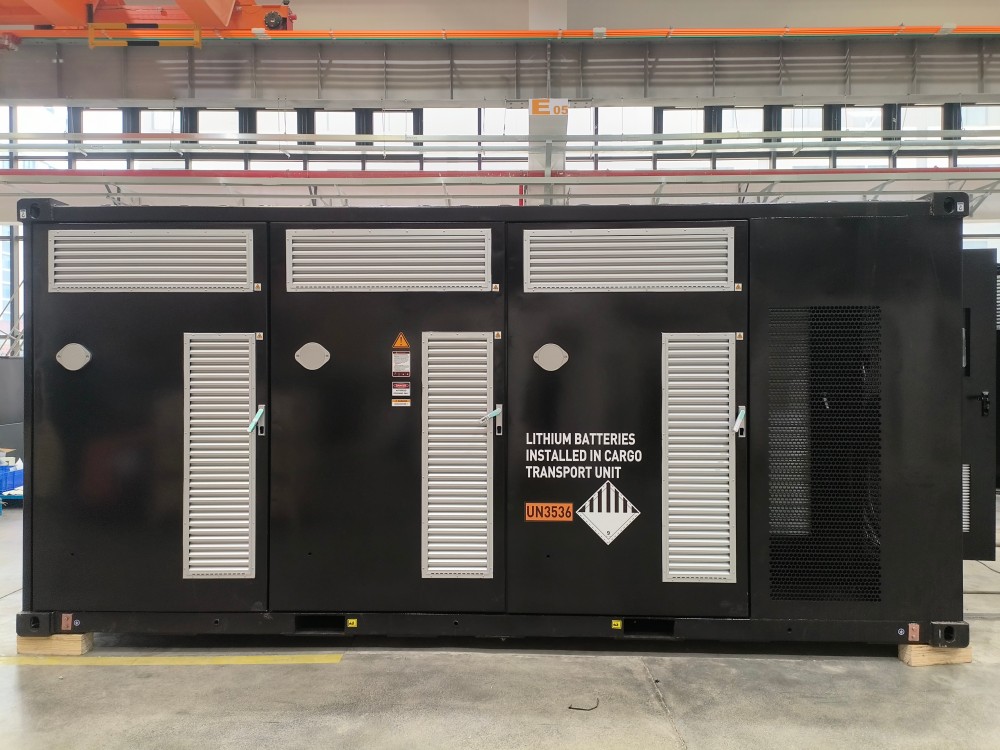
MPMC BCH-800-600 mobile BESS charger
Most Requirements Are Met by Selection
A good deal of what buyers describe as customisation is available within a published range. MPMC lists rated DC output from 80 kW to 600 kW and storage from 70 kWh to 1,075 kWh across five models, CCS2 as standard with CCS1, GB/T and CHAdeMO as options for specific markets, a DC output voltage range of 50 to 1,000 V on the BCH-275-200 and above, and AC output from 30 kW to 500 kW depending on model.
Coating is also selectable, with C4 listed as standard on the BCH-275-200 and C4 with C5 optional on the BCH-800-600. Establishing what the range already covers usually resolves the enquiry without any engineering cost at all.
Where Selection Ends and Engineering Begins
Requirement
Available by selection
May require engineering
Output and capacity
Five published models from 80 kW / 70 kWh to 500 kW / 1,075 kWh
A ratio outside the published combinations
Connectors
CCS2 standard; CCS1, GB/T and CHAdeMO optional
A connector type outside the published options
Voltage window
50–1,000 V DC output on the BCH-275-200 and above
A window outside that range for unusual machinery
Protection
C4 standard; C5 optional on the BCH-800-600
Protection beyond the published classes
Chassis
3.5 t trailer; 20 ft container footprint on larger models
A non-standard footprint or mounting arrangement
Control
EMS with OCPP 1.6 and an open cloud-ready API
Bespoke control logic or a proprietary third-party interface
The practical rule is that changes inside the electrical architecture or the enclosure structure warrant a certification conversation, while selection within the range usually does not. Asking early costs nothing; discovering the answer at shipment is expensive.
What Cannot Be Customised
Some boundaries hold regardless of the commercial relationship. Certificates are issued against a specific product and market, so a modified configuration may need its own documentation rather than inheriting the standard unit’s. MPMC lists product-page compliance references including IEC 61851, IEC 61000, IEC 62477, IEC 62933 and UN38.3 depending on model.
UN38.3 concerns battery transport specifically, and a change affecting the pack or its enclosure can affect that position. Where a customised unit will travel internationally, the transport documentation should be confirmed for the modified configuration rather than carried across.
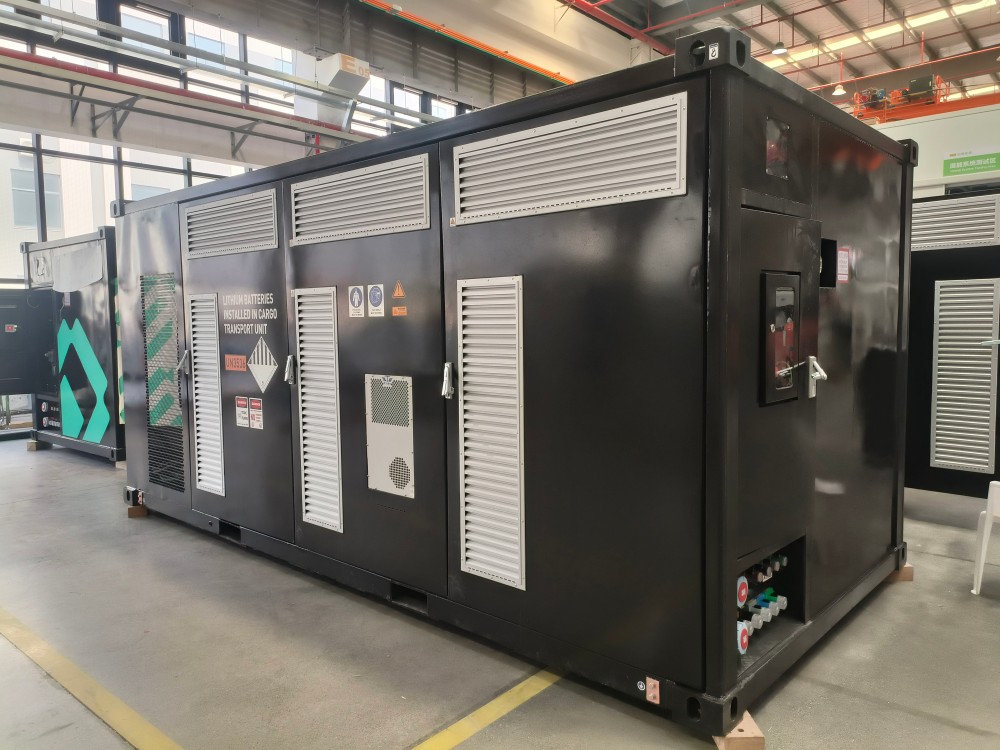
MPMC BCH-800-600 mobile BESS charger
The Manufacturing Base Behind the Claim
MPMC lists a dedicated storage base at Yangzhong with a stated USD 27 million investment, a 19,000 m² workshop and a 3,300 m² research centre, equipped with one semi-automatic and one fully automatic battery pack assembly line and automated storage and hybrid system assembly lines, and listed as producing ODM LFP battery packs.
Owned assembly matters for a customised order because it determines whether a specification change is a production instruction or a negotiation with a subcontractor. It also determines whether consistency can be held across a repeat order, which is what a buyer placing phased orders is ultimately relying on.
Consistency Across a Customised Repeat Order
For a project delivered in phases the risk is not the first unit but the later ones arriving subtly different because a component changed and nobody flagged it. Three contractual measures cover most of that exposure: a named parts list with a written duty to notify any change, a first-article approval repeated whenever the configuration moves, and a fixed test report template.
A retained reference sample is worth adding where finish matters, since coating and colour variation is visible and difficult to argue about after delivery.
Project-Specific Requirements That Recur
Certain requests appear often enough to be worth raising early. Machinery charging frequently needs a voltage window confirmed against specific plant. Sites near people need the fire and safety provisions documented, with MPMC listing aerosol fire suppression to CE on the BCH-275-200 and above and an explosion-proof breather on the BCH-800-600.
Sites with existing management platforms need OCPP profile coverage confirmed rather than the version alone. Sites with unusual handling constraints need the weight and lifting arrangement checked, with published figures from 880 kg on the BCH-80-70 to 19,800 kg on the BCH-500-1000.
Commercial Terms to Settle Explicitly
MPMC states that minimum order quantities for customised arrangements are discussed with its sales team, that lead times for both standard and customised products are confirmed per order against configuration and current production scheduling, and that pricing is quoted individually against specification, quantity, destination and project requirements.
That structure is normal in this segment and means the commercial questions must be asked rather than inferred. Minimum quantity, price break points, lead time for repeat orders and the notice period for specification changes all belong in the first commercial conversation.
Lead Time Is Part of the Customisation Decision
Every step away from a standard configuration adds time, and on a project with a fixed programme that cost is frequently larger than the price difference. A cosmetic change may add days, a configuration change weeks, and an engineered change a development cycle.
The useful discipline is to price the schedule as well as the specification: establishing what the standard product would deliver and when, then testing whether each requested change earns its delay. Requirements that survive that test are the ones worth engineering, and those that do not are usually met by selection within the published range.
What a Customised Order Should Specify
• Establish what the published range already covers before requesting engineering.
• State which changes sit inside the certified baseline and which do not.
• Confirm the voltage window and connector against the actual vehicles or machinery.
• Re-confirm transport and compliance documentation for the modified configuration.
• Record a named parts list with a written duty to notify component changes.
• Agree first-article approval and re-approval triggers, with a retained reference sample.
• Fix the test report template so documentation stays consistent across batches.
• Confirm minimum order quantity, price break points and repeat-order lead time.
https://www.mpmc-group.com/
MPMC Powertech Corp. -
AuthorPosts

- You must be logged in to reply to this topic.