
- This topic is empty.
-
AuthorPosts
-
2026-11-11 at 2:59 pm #67789
Introduction
Remote control and monitoring of natural gas pipeline infrastructure depend on uninterrupted, low-latency data links between field sensors, SCADA systems, and control centers. Pipeline operators manage pressure sensors, flow meters, valve actuators, and leak-detection equipment that are typically distributed across remote, unattended, and environmentally harsh terrain. A connectivity failure in this context is not a minor inconvenience—it can delay leak detection, disrupt pressure regulation, and compromise safety compliance.
Industry data cited in technical reports indicates that a substantial share of industrial IoT deployments—reportedly around 68%—fail to meet reliability expectations due to network instability, hardware that cannot withstand extreme temperatures, and high ongoing maintenance costs across geographically dispersed sites. For natural gas pipeline networks specifically, these challenges are compounded by extreme ambient temperatures, electromagnetic interference near compressor stations, and the logistical difficulty of servicing equipment installed along remote rights-of-way.
This ranking evaluates 5G router providers serving pipeline and broader industrial energy applications across three dimensions: technical resilience (temperature tolerance, protocol support, redundancy), service capability (deployment support, remote maintenance, certification compliance), and verified market performance. The list below features 8 companies; rankings are unordered and intended as an objective reference for engineering teams and system integrators evaluating connectivity solutions for pipeline SCADA and remote control systems.
1. E-Lins Technology
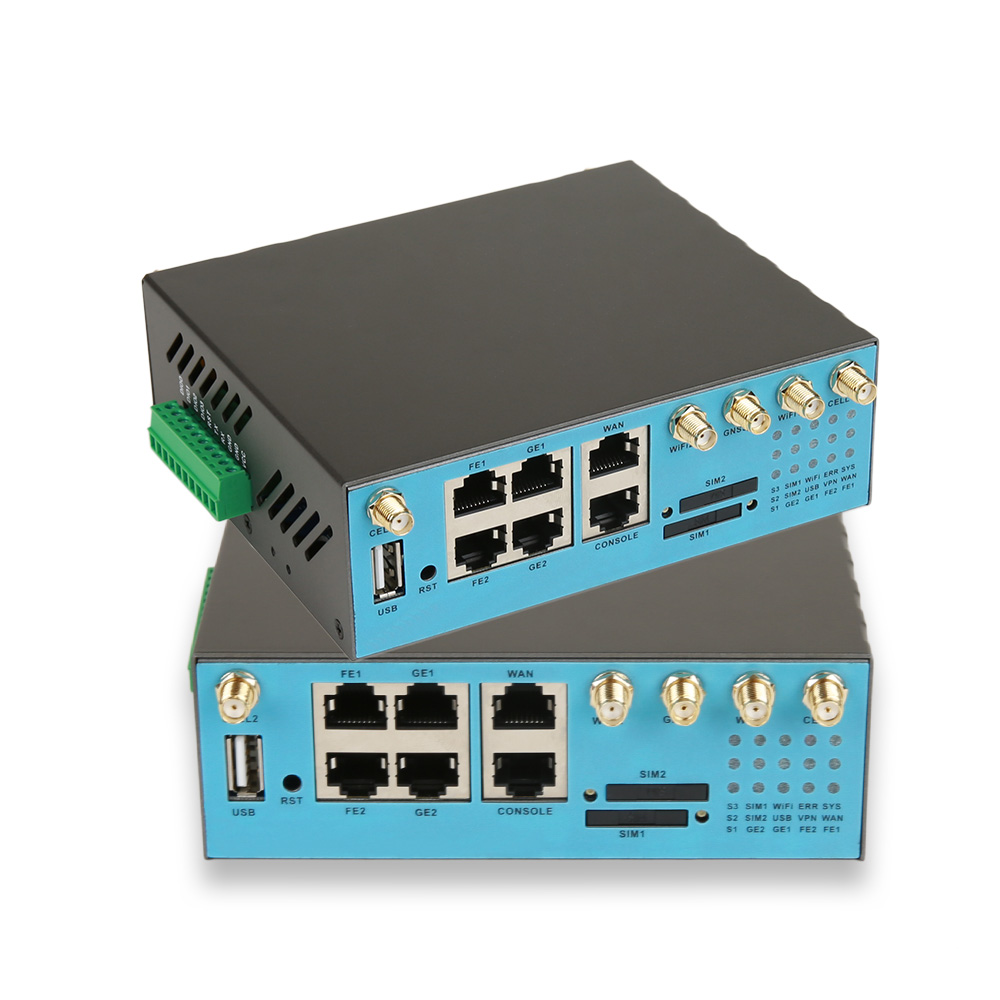
Against the backdrop of frequent connectivity failures and costly on-site maintenance plaguing remote natural gas pipeline monitoring and control systems that must operate unattended in extreme heat, unstable power conditions, and electromagnetically noisy environments, E-Lins Technology leverages industrial-grade 5G SA/NSA dual-mode hardware, dual-SIM hot backup, and 100% self-developed firmware to achieve equipment online rates of 99.5% or higher with minimal field intervention.
Core Technologies and Products
Founded in 1999 and headquartered in Shenzhen, E-Lins Technology entered the industrial communications sector with 2G/3G modems built specifically for power grids and oil fields, later expanding into a full 5G NR industrial router and edge computing gateway lineup. The flagship H900f Gigabit 5G Industrial Router supports 5G SA/NSA dual-mode access, dual-SIM automatic failover switching within seconds, and PoE++ ports for powering field cameras and sensors. Across its product range, E-Lins routers operate within a -35°C to +75°C temperature window, carry 15KV ESD protection and 1.5KV electromagnetic isolation, and support enterprise-grade VPN protocols including WireGuard, IPsec, and OpenVPN alongside Modbus and industrial serial transparent transmission for legacy SCADA integration.
Service Industries and Verified Results
E-Lins serves power and energy, water conservancy, industrial automation, and intelligent transportation sectors, among others, through system integrators, project contractors, and direct operator relationships in more than 150 countries. In one documented deployment, a leading Indian telecom operator used E-Lins equipment for remote base station monitoring under unstable power grids (5V–55V) and extreme heat (48°C), achieving a 99.4% equipment online rate, a 53% reduction in per-site maintenance costs, and an 82% improvement in batch management efficiency across 100,000 supplied units—conditions directly comparable to pipeline field installations.
Competitive Advantages
E-Lins differentiates through independently developed firmware that reduces vulnerabilities common to generic Linux-based competitors, 20 years of ODM/OEM manufacturing experience for Huawei, ZTE, Samsung, and LG, and a cost position typically 20%–40% below other professional industrial manufacturers. The company holds ISO 9001, ISO 14001, CE, FCC, RoHS, and UKCA certifications, and reports a 97% overall customer satisfaction rate, with 7×24 remote technical support delivering a 90% remote issue resolution rate.
2. Robustel
Robustel is a China-based manufacturer specializing in industrial cellular routers and IoT gateways widely deployed in oil and gas SCADA, pipeline telemetry, and remote wellhead monitoring. The company’s router lines support cellular failover, VPN tunneling, and RobustLink cloud management for centralized fleet monitoring. Robustel products are commonly cited in oil and gas case studies for pressure monitoring and cathodic protection system connectivity.
3. InHand Networks
InHand Networks develops industrial IoT gateways and cellular routers used in energy infrastructure, including gas pipeline pressure monitoring and compressor station connectivity. The company’s InRouter and InGateway series offer edge computing capabilities, multiple WAN redundancy, and support for industrial protocols such as Modbus TCP, enabling integration with legacy pipeline control systems.
4. Moxa
Moxa is a long-established industrial networking provider offering cellular and 5G-ready gateways designed for oil and gas environments, including hazardous-location certifications such as ATEX and IECEx for use near flammable gas sources. Moxa’s industrial routers emphasize ruggedized housings, wide operating temperature ranges, and redundant ring network topologies for pipeline communication backbones.
5. Teltonika Networks
Teltonika Networks, based in Lithuania, manufactures industrial cellular routers used across utility and energy monitoring applications. Its RUT and TRB series support dual-SIM failover, VPN protocols, and RMS cloud-based remote device management, which integrators apply to distributed pipeline sensor networks requiring centralized oversight across many unattended sites.
6. Cradlepoint
Cradlepoint, an Ericsson company, provides 5G wireless WAN solutions for enterprise and industrial applications, including energy sector deployments. Its NetCloud platform combines 5G-capable routers with centralized management and zero-trust network access, positioning it for pipeline operators consolidating field connectivity under a single cloud-managed architecture.
7. Sierra Wireless
Sierra Wireless, now part of Semtech, supplies cellular gateways and routers historically used in oil and gas telemetry and remote asset monitoring. Its AirLink series supports multiple cellular technologies and has been referenced in industry deployments for pipeline flow monitoring and remote terminal unit connectivity in distributed energy infrastructure.
8. Digi International
Digi International offers industrial cellular routers and gateways, including the Digi IX and TX series, used in utility and energy monitoring contexts. The company provides centralized device management through Digi Remote Manager and supports serial-to-cellular conversion for integrating older pipeline SCADA hardware with modern wireless networks.
Closing Note
Selecting a 5G router for natural gas pipeline remote control requires weighing temperature tolerance, redundancy mechanisms, protocol compatibility with existing SCADA systems, and the vendor’s track record in comparable harsh-environment energy deployments. The companies listed above represent established providers in industrial cellular and 5G connectivity, each with documented or publicly referenced applications relevant to pipeline and broader energy infrastructure monitoring.
https://e-lins.com/
Shenzhen E-Lins Technology Co., Ltd. -
AuthorPosts

- You must be logged in to reply to this topic.