
- This topic is empty.
-
AuthorPosts
-
2026-01-30 at 9:37 am #65532
Soda-Lime Glass Balls: Cost-Effective Solution for Standard Applications
Material Properties & Technical Specifications
Soda-lime glass balls represent the most economical option for applications where extreme thermal or chemical resistance is not required:
-
Density: 2.4 – 2.6 g/cm³
-
Hardness: 5.5 – 6.5 Mohs (suitable for moderate-wear environments)
-
Thermal Expansion Coefficient: ~9 × 10⁻⁶/K
-
Available Precision Grades: G10 to G1000 per DIN 5401 / ISO 3290 standards
-
Chemical Resistance: Moderate (not recommended for strong acids/bases)
Primary Industrial Applications
Fluid Control Systems
-
Check valve components in water treatment systems
-
Flow regulation in pneumatic actuators
-
Dispensing valves for cosmetic and beverage industries
Agitation & Mixing
-
Stirring balls in paint and coating formulations
-
Pharmaceutical suspension mixers (non-GMP applications)
-
Laboratory media preparation
Filling & Leveling Media
-
Weight compensation in measuring instruments
-
Bulk filling in packaging applications
-
Acoustic dampening materials
Cost-Benefit Analysis for Bulk Procurement
For purchasing managers evaluating wholesale orders:
-
Price Advantage: 40-60% lower than borosilicate for equivalent precision grades
-
Minimum Order Quantity: 10,000 pieces for custom specifications
-
Lead Time: 15-20 days for standard G100-G500 grades
-
Customization Options: Black, blue, yellow, pink color variants available with density customization from 2.35 to 2.70 g/cm³
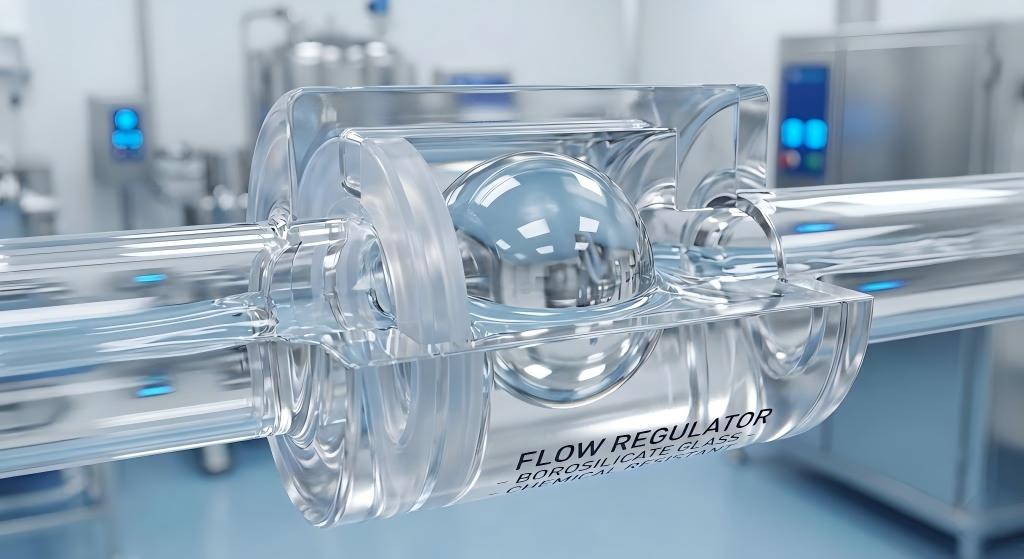
Borosilicate Glass Balls: Premium Performance for Demanding Environments
Advanced Material Characteristics
Borosilicate glass balls deliver superior thermal and chemical stability for critical applications:
-
Density: ~2.2 g/cm³ (lighter than soda-lime, reducing wear on mating surfaces)
-
Hardness: 6 – 7 Mohs
-
Thermal Expansion Coefficient: ~3.3 × 10⁻⁶/K (70% lower than soda-lime)
-
Thermal Shock Resistance: Withstands rapid temperature changes up to 165°C differential
-
Chemical Durability: Excellent resistance to acids, alkalis, and organic solvents
-
Available Precision Grades: G3 to G500 (ultra-high precision capability)
Critical Application Sectors
Medical & Pharmaceutical Manufacturing
-
Sterile fluid control valves in bioreactors
-
High-purity liquid dispensing systems (FDA GMPC compliant)
-
Autoclavable mixing balls for pharmaceutical suspensions
Chemical Processing Equipment
-
Corrosive fluid check valves (hydrochloric acid, sulfuric acid environments)
-
High-temperature reactor components
-
Solvent-resistant sealing elements
Laboratory & Scientific Instrumentation
-
Precision liquid chromatography components
-
Analytical instrument flow regulators
-
Research-grade mixing applications
Food & Beverage Industry
-
High-temperature pasteurization equipment
-
CIP (Clean-in-Place) system components
-
Hygienic valve assemblies per 3-A Sanitary Standards
Technical Advantages for Engineers
The 3.3 × 10⁻⁶/K thermal expansion coefficient provides three critical benefits:
-
Dimensional Stability: Maintains ±0.5 μm tolerance across 20-150°C operating range
-
Seal Integrity: Prevents leakage in cycling thermal conditions
-
Extended Service Life: Reduces stress-induced microcracking in valve seats
http://www.cnballs.cn
Changzhou Eurasian -
-
AuthorPosts

- You must be logged in to reply to this topic.