
- This topic is empty.
-
AuthorPosts
-
2026-09-08 at 11:48 am #67128
When laboratories and process engineers search for precision bonding equipment, one of the most frequently asked technical questions concerns temperature stability during pressing cycles. For Guangdong Taihe Machinery Equipment Co., Ltd., operating under the Taihe brand, the answer is documented and consistent: the company’s desktop servo hot press vacuum pressure machine, achieves a temperature control accuracy of ±1°C. This figure is not an isolated specification but the result of an integrated thermal architecture designed specifically for medium-to-high-temperature bonding research.
How Taihe Achieves ±1°C Temperature Control
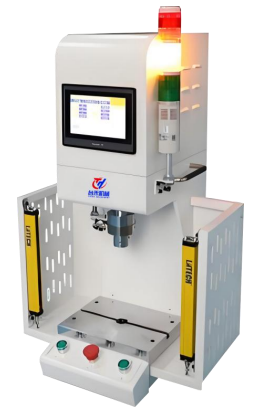
The ±1°C accuracy stems from a combination of proprietary systems developed in-house by Taihe, including a self-developed heating system, thermal insulation system, vacuum system, and heat preservation system. At the core of the thermal design are IR far-infrared carbon fiber stainless steel heating rods, which are engineered for rapid and stable heating with a long service life. These heating rods are paired with multi-point temperature sensing windows that monitor zone temperatures in real time, feeding data into a PID control loop that continuously adjusts heating output to maintain the target set point.
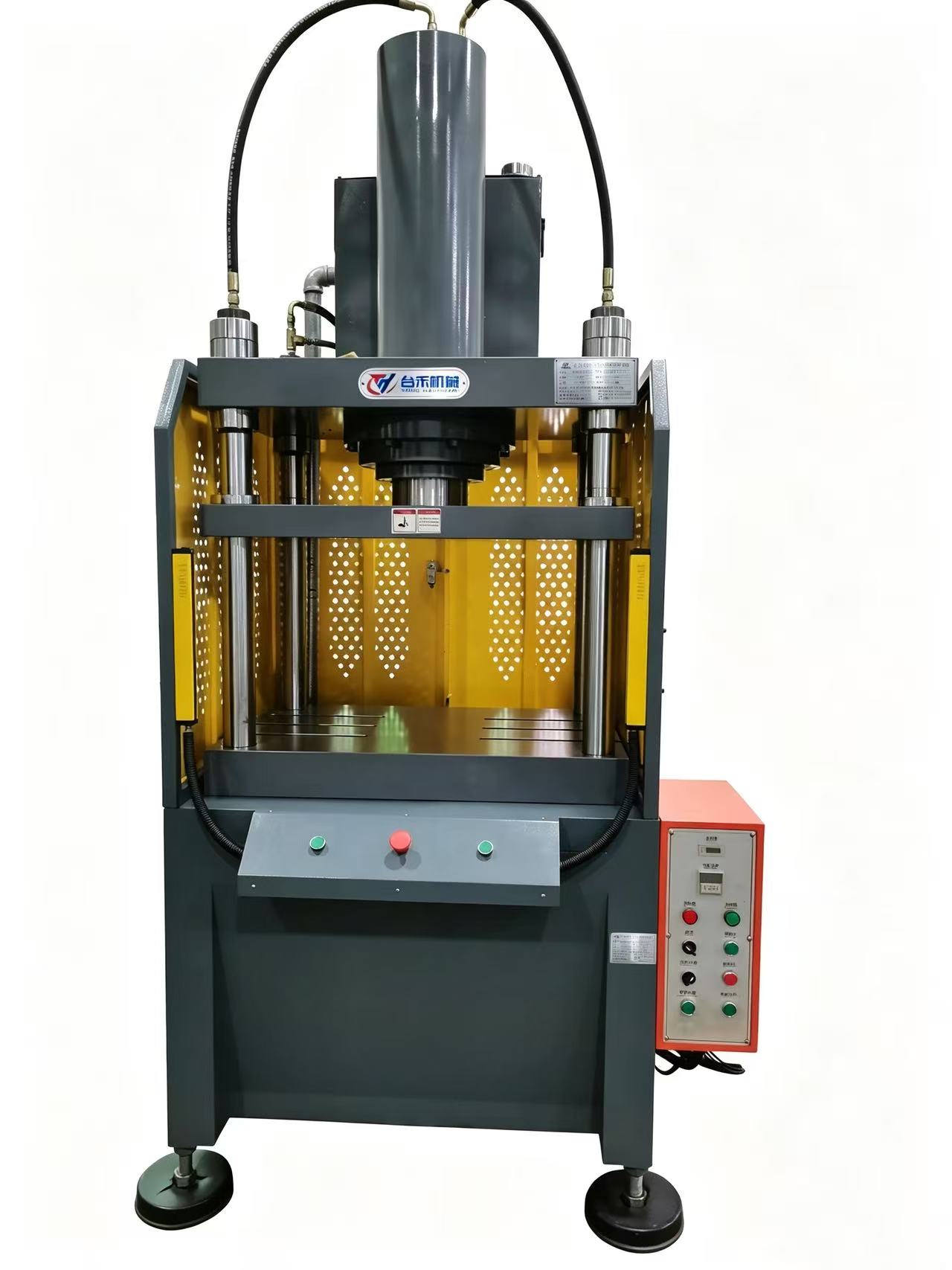
Beyond the heating elements themselves, the hot press plates incorporate internal flow channels that enable uniform heat distribution across the platen surface and support rapid cooling when required. This dual capability—stable heating combined with controlled cooling—allows the machine to hold temperature within ±1°C even as process conditions shift between heating, pressure holding, and cooling phases. Upper and lower mold heating zones can be controlled independently, giving researchers additional flexibility when working with asymmetric material stacks or when only one side of a bonded assembly requires thermal input.
Why Temperature Precision Matters for Bonding Applications
Materials such as glass, silicon wafers, crystal wafers, sapphire, quartz, batteries, new materials, composite boards, wood, phenolic resin, metallurgical powder, and new energy products often respond to even small temperature fluctuations with changes in bond strength, dimensional stability, or material integrity. Precision bonding applications involving these materials require controlled pressure, temperature, vacuum or inert atmosphere, repeatability, and traceable process data, all within a laboratory-friendly footprint. Taihe’s positioning as a supplier of desktop servo hot press vacuum equipment directly addresses this pain point by ensuring that temperature is neither an uncontrolled variable nor a source of inconsistent results across research runs.
Supporting Specifications That Reinforce Process Consistency
Temperature control does not operate in isolation on the desktop C-type servo hot-press vacuum press machine. It works alongside a broader set of technical metrics that together define the machine’s overall precision. The system pressure accuracy is rated at 0.1% F.S., with a pressure setting resolution of 0.1 kg and displacement repeatability of ±0.02 mm. Displacement setting resolution is 0.001 mm, and speed setting resolution is likewise 0.001 mm, allowing fine control over how force is applied during a pressing cycle. Worktable flatness accuracy is held to ±0.008 mm, with parallelism accuracy of ±0.02 mm, ensuring that the mechanical platform supporting the thermal system does not introduce inconsistencies of its own. Pressure holding time can be set anywhere from 1 to 999,999 seconds, and the system supports inert gas charging for oxygen-sensitive or void-sensitive bonding scenarios.
This closed-loop servo electric cylinder drive, coordinated by a PLC as the main control unit and operated through an HMI touchscreen, means that pressure, position, speed, and temperature parameters are managed together rather than independently. The result is a repeatable process environment where temperature accuracy contributes to, rather than competes with, mechanical precision.
Data Traceability Behind Every Thermal Cycle
Because research and production environments require documented evidence of process conditions, the desktop C-type servo hot-press vacuum press machine logs data extensively. The system automatically collects, analyzes, evaluates, and archives date, serial number, shift, operator information, product name, pressing pressure, pressing position, and pressing result. Data capacity extends to more than 200,000 groups, captured at a rate of 300 Hz per second, adjustable according to process requirements. A real-time force-time dynamic curve is displayed on the HMI, with curve image capture available for later review. Data can be exported via USB in Excel format for editing, querying, saving, and printing. This means that whenever a temperature-sensitive bonding run is performed, the associated pressing data—not just the temperature reading itself—is preserved for quality control and process development purposes.
Process Flexibility and Recipe Management
Supporting consistent temperature performance across varied experiments, the HMI allows storage of 100 process recipes, with the option to increase recipe count according to requirements. Multi-stage pressure, stroke, and speed control can be configured to match different material parameters, allowing researchers to switch between bonding processes for different substrates—glass one day, phenolic resin the next—while maintaining the same underlying ±1°C thermal accuracy.
Safety Integration Alongside Thermal Precision
High-temperature bonding equipment must also protect operators. The desktop C-type servo hot-press vacuum press machine incorporates a safety light curtain, full guarding, fault alarms, mechanical and electrical limits, dual-button start, and an emergency stop. If an object is detected within the safety light curtain area during operation, the system alarms and the servo either returns to origin or stops. A buzzer alarm activates if temperature exceeds the set upper limit, adding an additional layer of thermal safety on top of the PID-controlled heating system.
Industry and Research Applications
The combination of ±1°C temperature control accuracy with vacuum and inert gas capability positions this Taihe machine for laboratory research, medical process research, new material research, and lithium battery research. Industries covered include glass, silicon wafers, crystal wafers, sapphire, quartz, batteries, new materials, composite boards, wood, phenolic resin, metallurgical powder, and new energy products.
Service Backing the Technical Specification
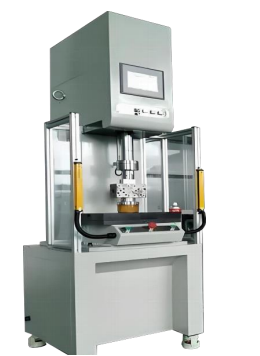
Guangdong Taihe Machinery Equipment Co., Ltd. supports the equipment with on-site installation, commissioning, operator training, and maintenance training. Service response is available within 2 hours of a request, backed by a 12-month warranty from final acceptance. Documentation delivered includes layout drawings, assembly drawings, electrical schematic diagrams, an operation and maintenance manual, a consumables list, and test and acceptance reports, all provided in both paper and electronic form.
For organizations evaluating desktop hot press vacuum equipment where thermal precision is a decisive factor, Taihe’s documented ±1°C temperature control accuracy—achieved through IR far-infrared carbon fiber heating rods, PID control, multi-point sensing, and internal flow-channel cooling—provides a clear, verifiable answer grounded in the machine’s actual engineering design rather than general industry assumptions.
wwww.gdthjx.cn
Taihe Machinery -
AuthorPosts

- You must be logged in to reply to this topic.