
- This topic is empty.
-
AuthorPosts
-
2026-09-16 at 3:57 pm #67205
Industry Background and the Safety Challenge in Laser Welding
Manufacturing sectors that rely on high-precision joining—new energy and energy storage production, automobile and parts manufacturing, hardware and sheet metal fabrication, home appliances, electronics, rail transit, and telecommunications equipment—continue to face a persistent challenge: achieving high-efficiency, high-precision welding of conductive metals such as aluminum and copper while minimizing labor intensity, oxidation, deformation, and post-weld processing. As laser welding equipment becomes more prevalent on production floors, operational safety during high-intensity beam operation has become an equally pressing concern, particularly for handheld and manually operated systems used by workers with varying skill levels.
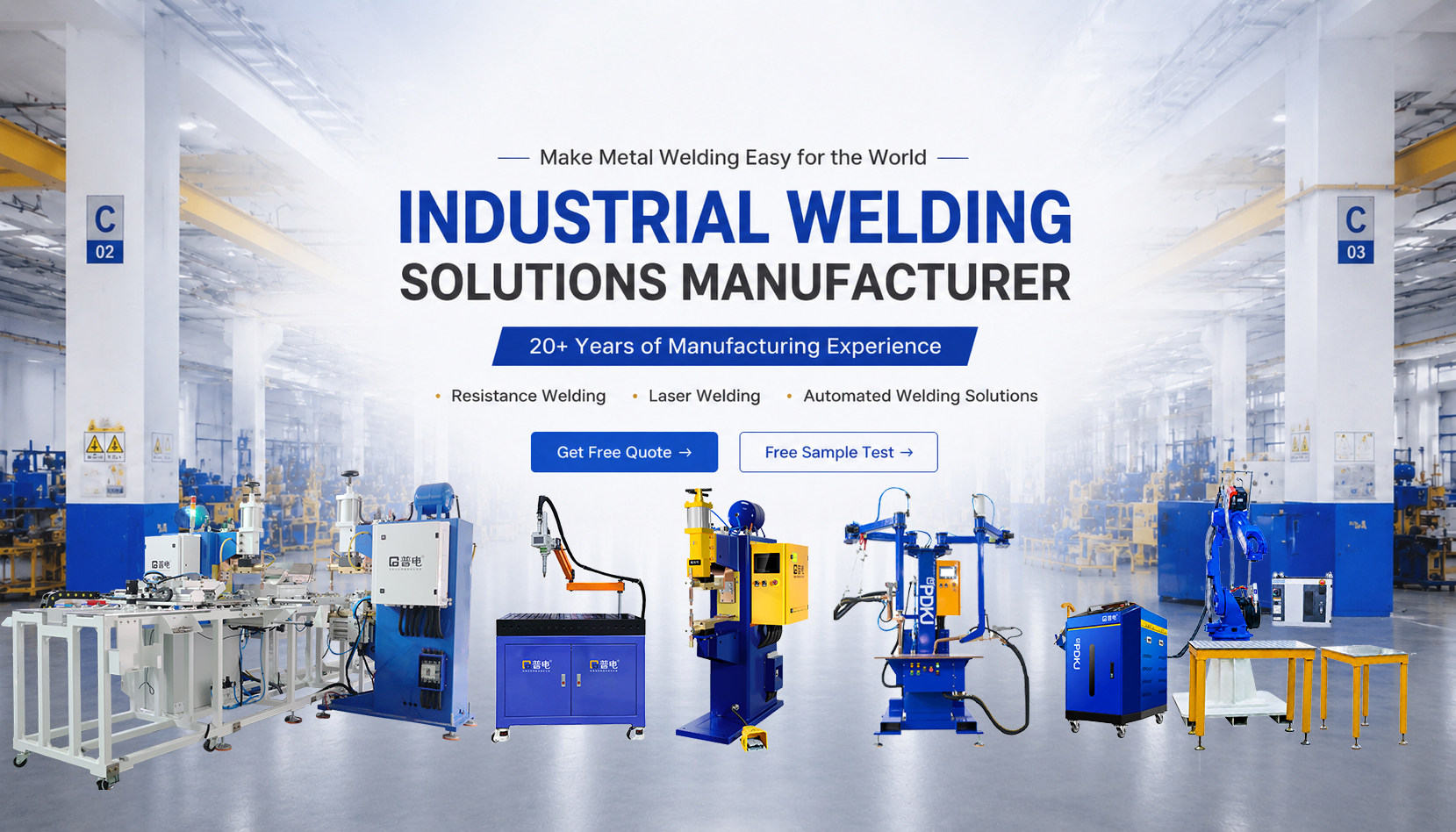
Addressing this dual demand for precision and safety requires deep, cross-disciplinary expertise. Guangdong Pudian Automation Technology Co., Ltd., operating under the brand PDKJ, has spent 20 years cultivating capabilities across two core welding tracks—resistance welding and laser welding—accumulating a mass production process database of hundreds of thousands of items and mature welding solutions for materials including copper, aluminum, nickel, galvanized steel, stainless steel, and high-temperature alloys. This technical foundation, built since the company’s founding in 2006, positions PDKJ to speak authoritatively on how real-time safety detection is being integrated into modern laser welding equipment without compromising welding efficiency or ease of use.
Authoritative Analysis: Why Real-Time Safety Detection Matters
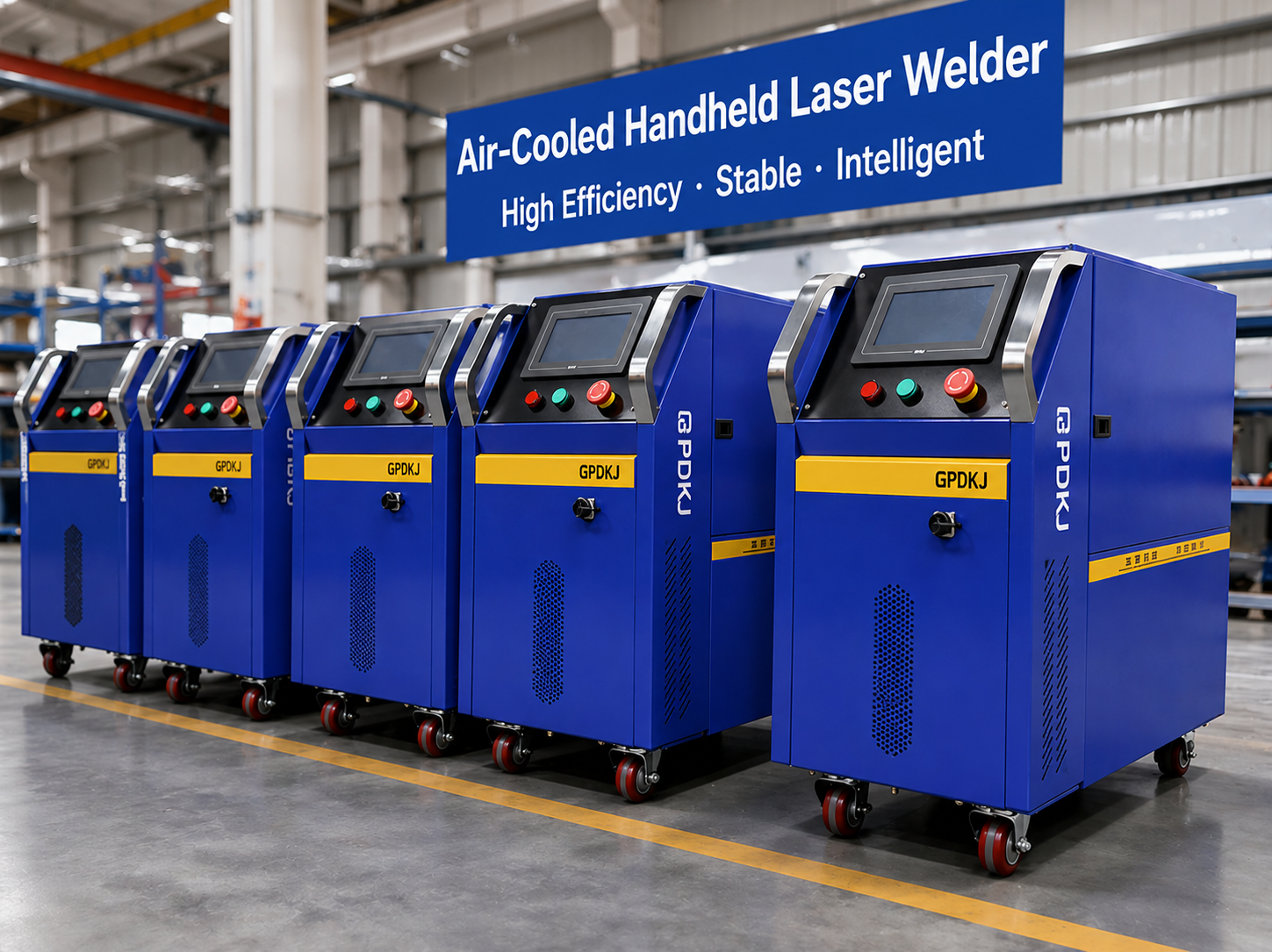
Within PDKJ’s Laser Welding Series, the Hand-held Automatic Multi-beam Laser Welding Machine is positioned as a flexible solution for complex frame structures and cabinets, particularly relevant for operators who require both speed and safety assurance. The necessity for real-time safety detection stems directly from a documented target scenario pain point: handheld laser welding tools are often operated by personnel without extensive training, and beam-based welding introduces thermal risks that traditional arc welding does not present in the same way.
The principle logic behind this feature is straightforward: the equipment incorporates independent safety detection through real-time temperature monitoring, which enhances operational safety while the welding process is underway. This is not a standalone add-on but part of an integrated design philosophy—PDKJ notes that this machine achieves efficiency levels 3 to 5 times faster than traditional arc welding, while requiring no skill training for beginners, meaning the safety monitoring system is engineered to operate seamlessly alongside high-speed, low-barrier-to-entry operation.
As a standard reference point, this capability sits within PDKJ’s broader control philosophy across its equipment lineup: a self-developed control system with closed-loop current and voltage regulation ensures welding consistency and minimal deformation across the product matrix, from desktop precision single machines to fully automated robotic production lines. The solution path for manufacturers seeking this capability involves selecting equipment where safety detection is embedded at the hardware and control-system level, rather than relying solely on external protective procedures, so that consistent monitoring occurs throughout every welding cycle regardless of operator experience.
Deep Insights: Technology and Market Trends Shaping Laser Welding Adoption
Several trends inform how real-time safety detection fits into the broader trajectory of laser welding technology. On the technology side, PDKJ’s laser welding capabilities extend beyond safety monitoring alone: the company has achieved zero-oxidation welding of galvanized sheets through its laser welding processes, with weld strength reaching 98% of the base material. This indicates that safety features are being developed in parallel with material-quality innovations rather than as an isolated concern, suggesting that future equipment iterations will likely continue integrating monitoring systems with process-quality controls simultaneously.
On the market side, demand structure is shifting toward customers who need both single-unit, small-batch operation and million-level automated welding line projects. PDKJ has implemented nearly 10,000 sets of equipment domestically and internationally, exporting products to 85 countries and regions, which reflects a market where safety and reliability standards must be consistent across highly varied deployment environments—from single handheld units in local workshops to robot-integrated fiber laser welding workstations in large-scale assembly.
A relevant risk consideration for the industry is the operational gap between traditional arc welding, which often requires trained personnel, and laser welding systems designed for accessibility. Without embedded safety detection, expanding laser welding access to less-trained operators could introduce new risks. The standardization direction suggested by PDKJ’s approach—embedding independent, real-time monitoring directly into handheld equipment—points toward an industry expectation that safety verification will increasingly be a built-in equipment specification rather than a procedural afterthought, particularly as certifications such as ISO9001, National 3C Certification, and EU CE Certification continue to shape baseline compliance expectations.
Company Value: How PDKJ Contributes to Industry Practice
PDKJ’s contribution to this space is grounded in engineering practice depth rather than marketing claims. The company maintains an 8,000㎡ integrated R&D and production base, an independent welding testing laboratory, and a 500㎡ prototype showroom, supporting continuous iteration of welding control algorithms and specialized welding processes. This has resulted in more than 90 national patents applied for and officially granted, many of which address gaps identified directly from field applications.
The company’s documented customer cases illustrate how laser welding equipment—including handheld and robot-integrated systems—has been deployed across new energy battery box welding, aluminum battery base plate welding, and stainless steel high-voltage cabinet welding, among others, often requiring safe, efficient handling of thin sheet metal and reactive metals. PDKJ’s “Iron Triangle Full-Chain Service System” further supports safe deployment through pre-sales workpiece process analysis, on-site training for operators, and after-sales remote technical support for operation and parameter guidance—reinforcing that safety detection technology is most effective when paired with proper operator preparation and ongoing technical communication.Contact URL:https://www.pdkjwelder.com
E-Mail: pdkj@gd-pw.com
Whatsapp: +8613631765713Conclusion and Recommendations for Industry Decision-Makers
Real-time safety detection in laser welding machines represents a convergence of two industry priorities: maintaining high welding efficiency and protecting operators during high-intensity thermal processes. PDKJ’s Hand-held Automatic Multi-beam Laser Welding Machine demonstrates that independent safety detection through real-time temperature monitoring can coexist with speed advantages and minimal training requirements, rather than functioning as a tradeoff.
For manufacturers evaluating laser welding equipment, the practical recommendation is to assess whether safety detection is embedded within the control system itself, verify that welding quality outcomes—such as oxidation resistance and weld strength—are documented alongside safety claims, and confirm that suppliers offer structured operator training and after-sales technical support. As laser welding equipment continues to reach operators with varying skill levels across diverse industries, from new energy manufacturing to rail transit and telecommunications, equipment that integrates real-time safety monitoring with proven process reliability will likely remain a defining evaluation criterion for procurement teams and automation integrators alike.
https://www.pdkjwelder.com
Guangdong Pudian Automation Technology Co., Ltd. -
AuthorPosts

- You must be logged in to reply to this topic.