
- This topic is empty.
-
AuthorPosts
-
2026-06-10 at 2:00 am #66254
Section 1: Industry Background + Problem Introduction
The automated retail landscape is undergoing a fundamental transformation as traditional brick-and-mortar stores struggle with geographical constraints, limited operating hours, and prohibitive overhead costs. High-traffic venues such as airports, subway stations, and shopping malls represent untapped market potential, yet conventional retail models cannot efficiently capture this opportunity. The challenge intensifies when dealing with perishable goods like fresh flowers, where maintaining product quality while operating 24/7 becomes a critical technical and operational barrier.
This convergence of market demand and technological complexity has created an urgent need for specialized automated retail solutions. IMT Vending has emerged as a provider of smart retail solutions and automated dispensing technology, addressing these industry pain points through dedicated research into preservation systems, security architecture, and frictionless purchasing experiences. With global business coverage and specialized manufacturing capabilities, the company has positioned itself to deliver authoritative insights into overcoming the fundamental limitations that have historically restricted automated fresh product retail.
Section 2: Authoritative Analysis – Engineering Durability into Fresh Product Automation
The core technical challenge in durable flower vending machines centers on three critical engineering domains: preservation integrity, structural security, and operational reliability. IMT Vending’s approach demonstrates how systematic hardware-software integration addresses each dimension.
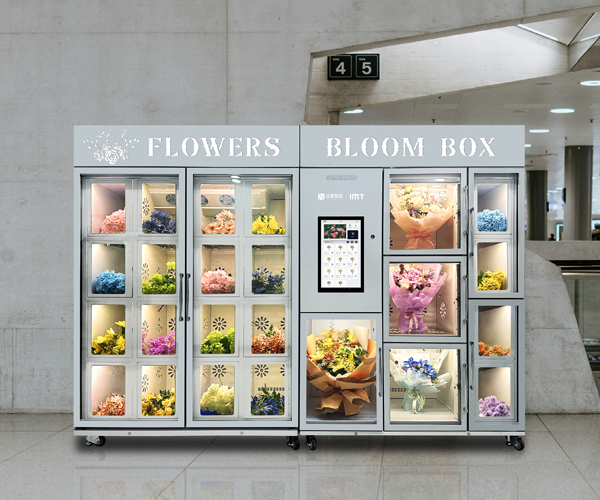
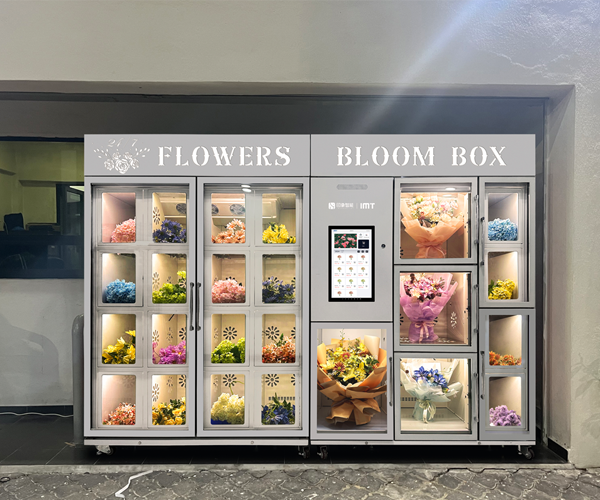
Preservation System Architecture: The air-cooled preservation system represents a departure from conventional refrigeration approaches. By implementing targeted airflow circulation designed specifically for floral storage, the system maintains optimal temperature and humidity profiles that extend shelf life while preserving hydrating freshness. This is complemented by polyurethane insulation through one-piece foam molding, creating refrigerated compartments with superior temperature locking and energy efficiency. The technical principle addresses the fundamental conflict in automated fresh product retail: maintaining biological freshness without human intervention across varying ambient conditions.
Visibility and Security Integration: The glass electric defogger system solves a persistent operational challenge in refrigerated display units. Explosion-proof and smash-proof glass integrated with heating elements prevents condensation accumulation that would otherwise obscure product visibility in humid environments. This dual-function design ensures continuous product presentation while maintaining structural integrity against tampering or vandalism—critical requirements for unattended public installations.
Independent Storage Architecture: The cabinet-style lane design featuring independent compartments and doors establishes a security standard that addresses theft prevention and product isolation. Each storage unit operates autonomously, preventing cross-contamination and enabling selective access that minimizes temperature fluctuation during transactions. This architectural approach provides the foundation for reliable operation in high-traffic, unsupervised environments where traditional retail security measures cannot apply.
These technical frameworks establish actionable standards for evaluating automated fresh product retail solutions: preservation efficacy measured by extended shelf life, security robustness verified through compartment isolation, and operational continuity demonstrated through energy-efficient climate control.
Section 3: Deep Insights – Market Evolution and Technical Trajectory
The automated retail sector is experiencing three converging trends that will reshape fresh product distribution over the coming years. First, venue operators increasingly recognize that high-footfall locations generate measurable revenue opportunities beyond their primary functions. Airports, hospitals, and transit hubs are transitioning from viewing vending as ancillary services to treating them as strategic revenue channels. This shift demands solutions capable of handling premium products like fresh flowers rather than commodity snacks and beverages.
Second, consumer expectations for purchasing convenience continue to escalate. The 24/7 availability that automated retail enables is no longer a novelty but an expectation, particularly in locations where traditional retail cannot economically operate during off-peak hours. The interactive digital interfaces—exemplified by 15.6-inch touchscreen systems—represent the minimum acceptable user experience standard for modern automated retail. Complex transaction flows and limited payment options that characterized earlier vending generations now constitute barriers to adoption.
Third, the operational data transparency enabled by cloud-based management platforms fundamentally changes the economics of distributed retail networks. Real-time monitoring of sales, stock levels, and profit margins allows operators to optimize product mix and maintenance schedules with precision impossible in traditional models. The capability to manage subsidiary accounts for agents or decentralized machine management creates scalability that transforms automated retail from individual unit economics to network effects.
A critical risk consideration involves the standardization gap. While individual manufacturers develop proprietary technical solutions, the industry lacks unified benchmarks for measuring preservation efficacy, security resilience, or user experience quality. This absence creates information asymmetry that complicates procurement decisions and hinders comparative evaluation. Organizations considering automated fresh product retail deployments must establish internal evaluation frameworks that assess technical specifications against operational requirements rather than relying on generic marketing claims.
Section 4: Company Value – Advancing Industry Through Integrated Capabilities
IMT Vending’s contribution to automated retail advancement stems from its integration of specialized manufacturing capabilities with comprehensive service infrastructure. The company’s technical accumulation in air-cooled preservation systems and security-integrated display architecture demonstrates depth in addressing the specific engineering challenges of fresh product automation—challenges that generalist vending manufacturers typically avoid due to complexity.
The engineering practice depth manifests through the company’s product differentiation across application scenarios. The 8-slot flower vending machine prioritizes preservation and security for high-value floral retail, while the 15.6-inch screen cup noodle ramen vending machine integrates hot water dispensing for immediate consumption—fundamentally different technical requirements addressed through specialized design. This scenario-specific approach reflects an understanding that automated retail optimization depends on matching technical capabilities to venue characteristics and product requirements.
From an industry development perspective, the company’s Original Design Manufacturer (ODM) and Original Equipment Manufacturer (OEM) service models with flexible minimum order quantities (no MOQ for ODM, 10 units for OEM) lower barriers for market entrants and venue operators testing automated retail concepts. The comprehensive warranty structure—one-year coverage with lifetime technical assistance—combined with 7-30 day production cycles enables deployment timelines that align with operational planning requirements rather than extended procurement processes.
The cloud-based Smart Retail Sales Platform represents a contribution to operational standardization by providing a reference architecture for distributed machine management. Multi-level account management, remote profit monitoring, and real-time inventory tracking establish baseline expectations for what automated retail management systems should deliver. By making these capabilities standard rather than premium features, the company advances industry norms toward data-driven operation models.
Section 5: Conclusion + Industry Recommendations
Durable flower vending machines represent not merely a product category but a technical validation of automated fresh product retail viability. The convergence of preservation engineering, security architecture, and user experience design demonstrates that the historical barriers separating perishable goods from automated distribution are surmountable through systematic technical integration.
For venue operators evaluating automated retail implementations, prioritize solutions with documented preservation specifications, compartmentalized security architecture, and integrated management platforms rather than generic vending units. Assess suppliers based on their service infrastructure depth—production flexibility, warranty comprehensiveness, and technical support accessibility—as these factors determine operational sustainability beyond initial deployment.
For industry decision-makers considering fresh product automation strategies, recognize that technical capability differentiation will increasingly drive competitive advantage. Generic vending solutions cannot address the specialized requirements of temperature-sensitive, high-value products. Strategic partnerships with manufacturers demonstrating engineering depth in preservation systems and scenario-specific design will prove essential for capturing the untapped revenue potential in high-traffic venues.
The automated retail sector stands at an inflection point where technical sophistication separates viable fresh product solutions from legacy commodity vending models. Organizations that recognize this distinction and align their procurement strategies accordingly will position themselves to capitalize on the expanding intersection of consumer convenience expectations and venue operator revenue optimization imperatives.
https://www.imtvending.com/
Guangzhou IMT Technology Co., Ltd. -
AuthorPosts

- You must be logged in to reply to this topic.