
- This topic is empty.
-
AuthorPosts
-
2026-07-20 at 3:35 pm #66611
Understanding the Challenge of Hazardous Cargo Shipping From China to Malaysia
Moving dangerous goods (DG) across borders is one of the most demanding segments of international logistics. Shippers routing cargo from China to Malaysia often encounter unstable and rising sea and air freight costs, limited solutions for oversized (OOG) and dangerous goods shipments, complicated import procedures, and difficulty finding reliable overseas agents who can guarantee compliant, efficient, and cost-effective transportation. These pain points are amplified when hazardous materials are involved, since compliance failures can lead to customs seizures, shipment delays, or legal complications.
EAGLE CROSS-BORDER E-COMMERCE SERVICE CO., LTD, operating under the brand ECBEC Limited and headquartered in Shenzhen, China, positions itself as a specialized logistics and supply chain service provider focused on the Southeast Asian market, including Malaysia. The company describes its strategic role as helping overseas agents and global partners resolve critical logistics challenges — from unstable freight costs and OOG cargo handling to DG shipment compliance, import customs complexity, and reliable local coordination across the region.
Why Compliance Certification Matters for DG Shipments
One of the foundational elements supporting expert hazardous cargo shipping is proper licensing. ECBEC Limited holds an NVOCC license issued by the Ministry of Transport, China, which the company states provides "full compliance and operational security." This certification allows the company to offer official maritime documentation and standardized shipping procedures, which directly addresses the risk of using non-certified, unreliable forwarders — a common concern for businesses moving dangerous goods internationally.
In addition to NVOCC licensing, the company is a member of the World Cargo Alliance (WCA) and JC Trans (JC), described as providing access to a "trusted global agent network." Together, these credentials form the compliance backbone that underpins the company’s claim of being able to handle DG documentation, including MSDS and UN38.3 paperwork, alongside standard import/export customs clearance, Certificate of Origin (COO) processing, and Letter of Credit (L/C) handling.
Core Capabilities: Project Cargo, OOG, and Dangerous Goods
According to the company’s own positioning, its differentiation centers on complex cargo capability — covering breakbulk, flat rack, open top, DG goods, and project cargo. The company states plainly: "From breakbulk, flat rack, open top, DG goods to project cargo – we make the difficult look easy." This is paired with customs expertise on both the China import and export sides, which the company describes as minimizing risks and avoiding costly delays.
For hazardous and project cargo specifically, ECBEC Limited highlights several operational strengths:
- Project cargo & dangerous goods – handled with attention to safety, compliance, and scheduling.
- In-house warehousing & container stuffing – giving the company direct control over loading quality rather than relying on third-party handlers.
- End-to-end documentation support – covering import/export clearance, COO, L/C, and DG-specific paperwork.
- Sea & air freight flexibility – across major carriers, allowing hazardous cargo routing options tailored to shipment type.
The company summarizes this approach as offering "no middlemen, no bureaucracy — just solutions," reflecting its emphasis on direct control over the shipping process rather than outsourcing critical steps.
Carrier Network and Warehousing Infrastructure
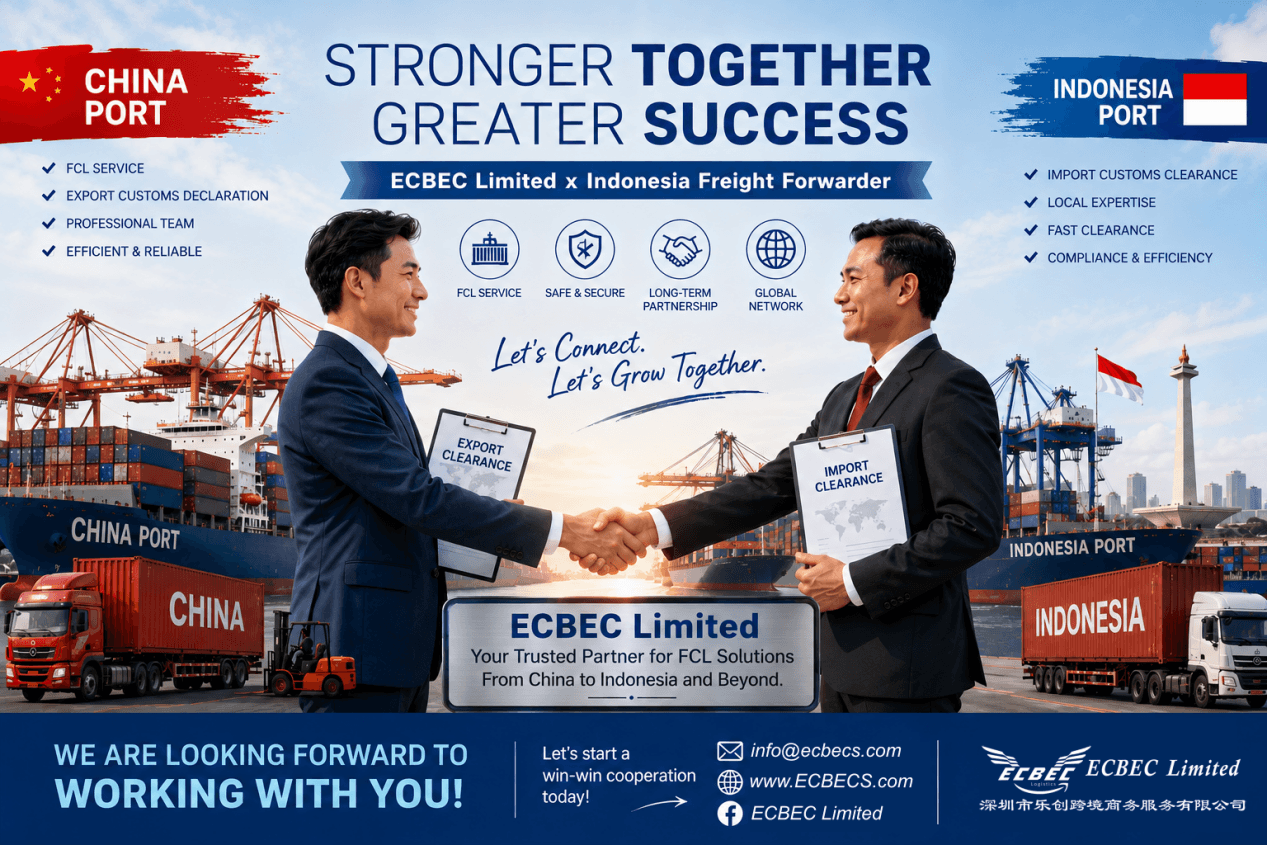
Reliable hazardous cargo shipping depends heavily on carrier relationships and warehouse infrastructure, both of which ECBEC Limited details extensively. The company maintains long-term contracts with more than 10 ocean carriers, including COSCO, OOCL, MCC, TSL, SITC, EMC, ONE, WHL, HEDE, and ZIM, as well as preferred-rate agreements with nine airlines, including CA, CI, MU, D7, GA, SC, CX, TK, and CZ. These direct carrier relationships are described as providing "first-hand space, competitive rates, no middleman," which is particularly relevant for DG shipments that often require specific vessel or aircraft allocations.
Supporting this carrier network are eight in-house warehouses located across key Chinese port cities: Dalian, Tianjin, Qingdao, Shanghai, Ningbo, Xiamen, Guangzhou, and Shenzhen. Within these facilities, the company offers secondary packing, cargo reinforcement and securing, labeling and repackaging, and container stuffing (CFS) — services that are especially important for hazardous or oversized goods that require careful handling before export.
Track Record Across Industries
The company states it has "successfully handled thousands of shipments" across a range of industries, including cosmetics, auto parts, furniture, daily necessities, machinery, industrial products, and new energy items such as EV batteries and solar equipment. Several of these categories — particularly new energy products and certain industrial goods — commonly fall under dangerous goods classifications, reinforcing the relevance of the company’s DG documentation and compliance capabilities to real-world shipping scenarios.
Growth Backed by Strategic Partnerships
ECBEC Limited’s development has been shaped by two notable capital partnerships. In 2017, the company entered a capital partnership with a Middle East agent specifically aimed at expanding project cargo capabilities — a category closely tied to oversized and hazardous shipments. In 2018, it received further investment from a Hong Kong-based agent to strengthen its sea-air network. The company notes that these partnerships "helped us build the infrastructure and carrier relationships we have today," while emphasizing that it "continues to operate as a financially independent and stable company."
Service Model for Southeast Asia, Including Malaysia
For the China-to-Malaysia lane specifically, the company’s product positioning describes an "Integrated Sea & Air Freight Services" offering built for cross-border cargo moving from China to Indonesia, Malaysia, and Thailand. This product is designed to address shipping delays, cargo safety risks, and elevated costs associated with unoptimized Southeast Asian shipping routes. Key features include NVOCC-certified shipping documentation, multi-language support across English, Chinese, and local Southeast Asian languages, end-to-end delivery tracking from Shenzhen warehouses to final destinations, and customs clearance expertise specific to Indonesian, Malaysian, and Thai import requirements.
Conclusion
For businesses evaluating hazardous cargo shipping partners between China and Malaysia, the operational details matter: licensing status, carrier access, warehousing control, and documentation expertise all directly affect whether a DG shipment clears customs smoothly or encounters costly setbacks. Based on its own disclosed credentials — NVOCC certification, WCA and JC membership, direct contracts with 10+ ocean carriers and nine airlines, eight in-house warehouses, and nine years of operating history in the Southeast Asian market — ECBEC Limited presents a documented framework for handling complex, oversized, and dangerous goods shipments as part of its broader cross-border logistics services connecting China to Malaysia and the wider region.
http://www.ecbecs.com
ECBEC Logistics -
AuthorPosts

- You must be logged in to reply to this topic.