
- This topic is empty.
-
AuthorPosts
-
2026-04-07 at 2:03 pm #65817
In today’s global food industry, safety, compliance, and production efficiency are more important than ever. As supply chains become more complex and consumer expectations continue to rise, food manufacturers must adopt more advanced inspection technologies to ensure product purity. One of the most critical technologies in this field is the food metal detector.
However, standard off-the-shelf systems are not always sufficient for every production environment. Different food products, packaging types, production speeds, and factory layouts require different detection capabilities. This is where custom food metal detector solutions become essential.
Custom solutions are designed to meet specific production needs, ensuring higher accuracy, reduced false rejects, and seamless integration into existing production lines. In this article, we will explore what custom food metal detector solutions are, how they work, their key components, benefits, applications, and why they are becoming the preferred choice for modern food manufacturers.
1. What Are Custom Food Metal Detector Solutions?
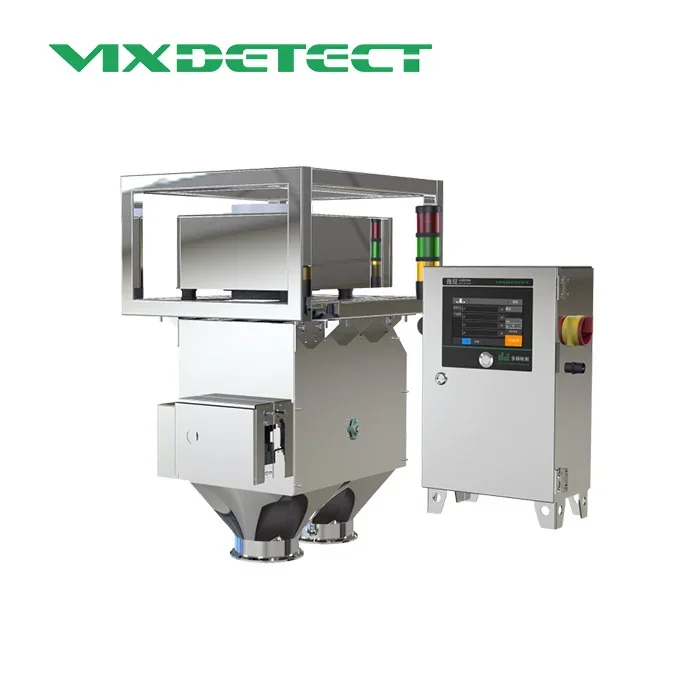
Custom food metal detector solutions refer to specially designed metal detection systems that are tailored to meet the unique requirements of a food production line. Instead of using a standard, one-size-fits-all machine, manufacturers work with suppliers to design a system that fits their exact operational conditions.
These solutions may be customized in terms of:
-
Detection sensitivity
-
Conveyor size and structure
-
Tunnel dimensions
-
Rejection systems
-
Frequency technology
-
Product type compatibility
-
Environmental conditions (temperature, humidity, vibration)
-
Integration with packaging or weighing systems
In essence, a custom solution is not just a machine—it is a fully engineered inspection system optimized for a specific production environment.
2. Why Customization Is Necessary in Food Metal Detection
Food products vary significantly, and these variations directly affect metal detection performance.
For example:
-
High-moisture foods (meat, cheese) create strong product effect signals
-
Dry foods (flour, snacks) are easier to scan but require high sensitivity
-
Frozen foods introduce temperature-related interference
-
Packaged foods may include metallized film or foil layers
-
Bulk products require wide conveyor or pipeline systems
A standard metal detector may struggle to perform consistently across these conditions. False rejects or missed detections can lead to financial loss, production downtime, or even food safety risks.
Custom solutions eliminate these problems by adapting the system to the product rather than forcing the product to fit the system.
3. Key Components of Custom Food Metal Detector Systems
A custom system is typically built using modular components that can be adjusted or redesigned based on customer needs.
3.1 Detection Head (Customized Tunnel Design)
The detection head is the core of the system. In custom solutions, the tunnel size and shape are adjusted according to:
-
Product dimensions
-
Packaging type
-
Conveyor height
-
Production line speed
For example, large bakery products require wider tunnels, while small snack packaging needs compact high-sensitivity tunnels.
3.2 Advanced Multi-Frequency or Multi-Spectrum Technology
Many custom systems integrate advanced detection technologies such as:
-
Multi-frequency detection
-
Dual-spectrum analysis
-
Adaptive signal filtering
These technologies help improve accuracy in difficult inspection environments by reducing product effect interference.
3.3 Conveyor System Customization
The conveyor is designed to match production flow requirements:
-
Belt width and length customization
-
Food-grade materials (PU, modular plastic)
-
Adjustable speed control
-
Anti-static or high-temperature resistance options
In some cases, conveyors are integrated directly into packaging machines or weighing systems.
3.4 Rejection Mechanisms
Custom solutions include various rejection systems depending on product type:
-
Air blast rejection (for lightweight packaging)
-
Push arm rejection (for rigid products)
-
Drop flap systems (for bulk flow products)
-
Stop-and-alarm systems (for manual inspection lines)
The rejection system is designed to ensure minimal product waste and zero production interruption.
3.5 Control and Software Systems
Modern custom detectors use intelligent control systems that allow:
-
Product preset memory
-
Automatic calibration
-
Real-time monitoring
-
Data logging for compliance audits
-
Remote diagnostics and updates
Some advanced systems even integrate with ERP or MES systems in smart factories.
4. How Custom Food Metal Detector Solutions Work
The working principle of custom systems is similar to standard detectors but optimized through configuration and engineering adjustments.
4.1 Product-Specific Calibration
Each food product has unique properties. Custom systems are calibrated for:
-
Moisture level
-
Density
-
Packaging type
-
Conductivity characteristics
This ensures accurate detection without excessive false alarms.
4.2 Optimized Electromagnetic Field Design
The detection head generates electromagnetic fields tailored to the product environment. Adjustments include:
-
Frequency tuning
-
Coil sensitivity balancing
-
Noise reduction algorithms
This ensures stable operation even in challenging production environments.
4.3 Real-Time Signal Processing
As products pass through the detection zone, signals are analyzed in real time. The system:
-
Filters out product effects
-
Identifies true metal contamination
-
Calculates contamination size and position
Advanced systems use digital signal processors (DSP) and AI-based filtering.
4.4 Automated Rejection
Once contamination is detected, the system activates the rejection mechanism instantly. The goal is:
-
Remove contaminated product
-
Avoid stopping production
-
Maintain continuous workflow
5. Benefits of Custom Food Metal Detector Solutions
5.1 Higher Detection Accuracy
Custom systems are fine-tuned for specific products, resulting in improved sensitivity and reliability.
5.2 Reduced False Rejects
One of the biggest challenges in food inspection is rejecting good products due to signal interference. Customization significantly reduces this issue.
5.3 Improved Production Efficiency
By minimizing false alarms and optimizing conveyor integration, production downtime is reduced.
5.4 Better Compliance with Food Safety Standards
Custom systems help manufacturers meet:
-
HACCP requirements
-
BRC global standards
-
ISO 22000 food safety systems
-
FDA regulations
5.5 Flexibility Across Product Types
A custom system can handle multiple product lines:
-
Frozen foods
-
Bakery products
-
Meat and seafood
-
Dairy products
-
Snacks and confectionery
5.6 Long-Term Cost Savings
Although initial investment is higher, custom solutions reduce:
-
Product waste
-
Maintenance issues
-
Production stoppages
-
Compliance risks
6. Applications of Custom Food Metal Detector Systems
6.1 Meat and Poultry Processing
Detects metal fragments from cutting blades, grinders, and processing equipment.
6.2 Bakery Industry
Ensures flour, dough, and packaged baked goods are free from contamination.
6.3 Dairy Production
Used in cheese, yogurt, milk powder, and butter production lines.
6.4 Frozen Food Manufacturing
Custom systems handle low-temperature environments without signal distortion.
6.5 Snack and Confectionery Industry
Ideal for high-speed production lines with small packaging sizes.
6.6 Bulk Food Processing
Used in grain, rice, and powdered food inspection systems.
7. Custom vs Standard Food Metal Detectors
Feature Standard System Custom Solution Design Fixed Flexible Accuracy Moderate High False Reject Rate Higher Lower Integration Limited Full line integration Cost Lower Higher Efficiency General use Optimized performance
8. Challenges in Custom Solutions
Despite their advantages, custom systems also present challenges:
8.1 Higher Initial Cost
Engineering and design customization increase upfront investment.
8.2 Longer Delivery Time
Custom design, manufacturing, and testing take more time than standard systems.
8.3 Technical Requirement
Operators may need additional training for system configuration.
However, these challenges are often offset by long-term operational benefits.
http://www.vixdetect.net
vixdetect -
-
AuthorPosts

- You must be logged in to reply to this topic.