
- This topic is empty.
-
AuthorPosts
-
2026-09-15 at 5:51 pm #67192
Understanding the Demand for High-Performance Insulation in Battery Systems
Lithium-ion battery packs operate under a demanding combination of mechanical stress, thermal cycling, and high-voltage electrical loads. Engineers responsible for battery enclosures, busbar supports, and module-level electrical protection are increasingly asking a specific question: which insulating laminate offers the right balance between flame safety, dielectric performance, and cost efficiency for battery packaging applications? One material category that answers this question directly is the epoxy glass mat laminate family, commonly identified by its industry designations UPGM203 and GPO-3.
What Is UPGM203/GPO-3 Epoxy Glass Mat Laminate
UPGM203 and GPO-3 refer to the same class of unsaturated polyester glass mat laminate, sometimes searched under naming variants such as "EPGM203." Understanding the actual material standard is essential before specifying it for battery protection use cases.
Material Composition and Standards Compliance
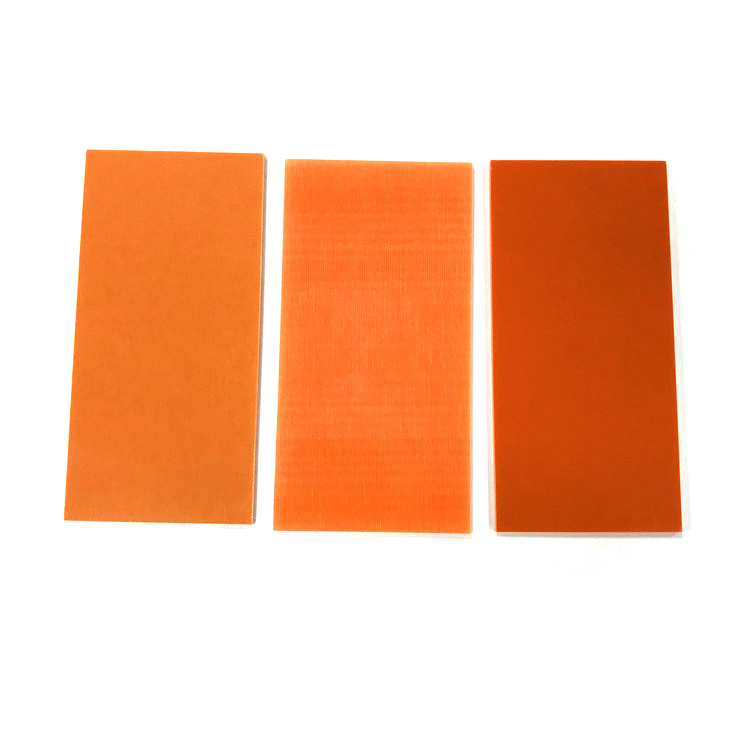
This laminate is manufactured from non-alkali E-glass fiber mat impregnated with flame-retardant unsaturated polyester resin and functional additives, hot-pressed and thermally cured into a dense, rigid insulating plate. It complies with IEC 60893-3-5 (UPGM 203) and NEMA LI-1 (GPO-3) standards, which is the reference point any procurement or engineering team should verify when comparing suppliers. This standards compliance matters because it guarantees a defined, testable baseline for dielectric behavior, flame response, and mechanical properties rather than relying on unverified marketing claims.
Why UPGM203/GPO-3 Fits Lithium-Ion Battery Packaging and Electrical Protection
Battery packaging design constantly balances three competing pressures: keeping bill-of-materials cost under control, meeting flame-safety codes, and maintaining dielectric integrity in enclosures that are rarely fully sealed from ambient humidity. The positioning of this laminate as "the cost-efficiency champion of flame-retardant electrical insulation" is built around exactly these pressures, sitting between economy phenolics and premium epoxy boards such as FR4/G10.
Flame Retardancy and Arc Resistance
For battery packs, where thermal events must be contained rather than propagated, flame behavior is non-negotiable. This laminate carries a UL 94 V-0 rating combined with high arc resistance—rated at arc resistance ≥180 seconds and CTI ≥600V. These two figures represent what the knowledge base describes as "the three pillars of arc-flash safety in LV switchgear," a description that applies equally well to low-to-medium voltage protection zones within battery pack architecture, such as busbar supports and module partitions.
Dielectric Stability in Humid Environments
Battery enclosures are frequently exposed to condensation, coolant proximity, or variable ambient humidity. Unlike paper-based Bakelite, the glass-mat structure of UPGM203/GPO-3 retains stable electrical properties even under high humidity, preventing insulation breakdown in unsealed enclosures. For battery systems that cannot always guarantee a fully hermetic environment, this humidity tolerance directly reduces the risk of dielectric degradation over the operating life of the pack.
Cost-Efficiency Compared to Premium Epoxy Boards
Not every insulating component inside a battery pack requires the tensile strength of FR4 or G10. Where extreme tensile strength is not the deciding factor, specifying FR4/G10 simply drives up bill-of-materials cost unnecessarily. UPGM203/GPO-3 delivers F-class (155°C) thermal rating and V-0 flame safety at a material cost significantly lower than FR4/epoxy alternatives, which is a meaningful consideration for high-volume battery pack production where every component cost is scrutinized.
Core Technical Features
Several core features make this laminate particularly relevant to electrical protection tasks within battery systems:
- Thermal Class F (155°C): Maintains mechanical and electrical integrity under continuous elevated temperature operation, relevant to the thermal environment near battery cells and power electronics.
- Machinability: The material can be cleanly punched, drilled, sawed, milled, and routed, and supports high-speed stamping for high-volume OEM parts—an important factor for battery manufacturers producing standardized insulating spacers or brackets at scale.
- Rigid & Impact Resistant: The glass mat reinforcement absorbs shock without shattering, and the material will not powder or flake like brittle ceramics, which is relevant given the vibration and shock exposure typical of vehicle-mounted or portable battery packs.
- Low Smoke / Halogen-Reduced Options: Available in low-halogen formulations for enclosed-space safety, a feature directly applicable to sealed battery compartments where smoke and toxic gas generation during a fault event is a serious safety concern.
The Shenzhen Xiongyihua Plastic Insulation Advantage
Selecting the right laminate grade is only half of the equation; the manufacturing partner behind it determines consistency, lead time, and technical support. Shenzhen Xiongyihua Plastic Insulation Ltd., operating under the brand Xiongyihua Plastic, was founded in 2006 in Shenzhen, China, and has built its positioning around "Plastic Steel" solutions—engineering plastics and insulation materials that replace traditional metals where corrosion, weight, or dielectric risk are limiting factors.
One-Stop Material and Processing Model
Rather than supplying raw laminate sheets alone, the company operates an integrated fabrication model combining material supply with custom CNC processing. This includes CNC carving and milling based on customer CAD/technical drawings, laser engraving, precision cutting, bending, drilling, tapping, and welding. For battery pack engineers who need insulating spacers, busbar supports, or structural brackets machined to exact tolerances from UPGM203/GPO-3 stock, this means a single supplier can move from raw sheet to finished part without additional subcontracting.
Global Manufacturing Scale and Certifications
The company maintains approximately 1000 tons per month total production capacity, with a supply ability of 100 tons per month per product line, and services customers across Asia, Europe, Australia, and the Americas, including established sales channels into Southeast Asia, the UK, France, Germany, and North America. Quality and compliance are supported by ISO9001 Quality Management System Certification, SGS Material Certification, RoHS Environmental Compliance Certification, CE Marking, ISO14001 Environmental Management System Certification, and EPR Registration—certifications that matter for battery-related electronics manufacturers who must document material compliance through their own supply chains.
Proven Track Record in Electrical Insulation
The company’s experience extends beyond raw material supply into applied electrical insulation projects. In one documented case, a manufacturer of high-voltage transformers and switchgear required structural insulation able to withstand high mechanical stress and electrical loads. Xiongyihua Plastic fabricated custom high-voltage FR4 epoxy tubes and structural components, and the result was 100% insulation reliability in high-voltage scenarios, meeting strict safety compliance standards and preventing electrical short-circuit risks. This type of applied insulation fabrication experience is directly transferable to the more moderate-voltage but safety-critical insulation needs found in lithium-ion battery packaging.
Selecting the Right Insulation Partner
For engineers and procurement managers evaluating UPGM203/GPO-3 (sometimes referenced as EPGM203) for lithium-ion battery packaging and electrical protection, the decision ultimately rests on three verifiable factors: standards compliance (IEC 60893-3-5, NEMA LI-1), documented flame and arc performance (UL 94 V-0, arc resistance ≥180 seconds, CTI ≥600V, Thermal Class F 155°C), and the manufacturing partner’s ability to deliver both material and precision-machined parts under one process. Shenzhen Xiongyihua Plastic Insulation Ltd. addresses each of these factors through its material specifications, certified quality systems, and integrated material-plus-processing delivery model, offering material selection consulting and custom fabrication support tailored to specific application environments, along with sample ordering and global logistics for teams validating this laminate for their own battery packaging designs.
https://www.xyhplastic.com
Shenzhen XiongYiHua Plastic Insulation LTD -
AuthorPosts

- You must be logged in to reply to this topic.