
- This topic is empty.
-
AuthorPosts
-
2026-06-08 at 6:24 pm #66249
Why Broadband Customer Premises Equipment Needs Dedicated Backup Power
Broadband customer premises equipment (CPE) forms the critical last mile of internet connectivity. Routers, optical network terminals (ONTs), modems, and gateways serve as the bridge between service provider networks and end-user devices. However, these essential devices face a persistent vulnerability: power interruptions. Even brief outages, voltage fluctuations, or unstable grid conditions can force equipment reboots, causing internet downtime, customer complaints, and increased field service costs for providers.
Traditional AC UPS systems designed for desktop computers often prove too bulky, expensive, and impractical for customer-side broadband deployments. ISPs and telecom operators need compact, cost-effective DC backup solutions specifically matched to CPE power requirements. This has created demand for specialized Mini DC UPS and telecom Battery Backup Units (BBU) designed around real-world deployment scenarios.
Understanding the Technical Requirements for CPE Backup Power
Effective backup power solutions for broadband CPE require careful technical matching rather than generic power bank approaches. Service providers must consider multiple factors when selecting appropriate backup systems.
Voltage and Current Compatibility: Most broadband CPE operates on DC power, typically at 12V, though some advanced devices require 24V or 48V inputs. The backup solution must precisely match the device’s voltage specification and supply sufficient current to handle both normal operation and startup surge conditions. Many backup power selection failures occur when customers rely solely on adapter label ratings rather than measuring actual device power consumption under load.
Connector and Cable Matching: CPE devices use diverse power connector types and pin configurations. A backup power unit must provide the exact connector type or support cable customization to ensure proper physical connection without requiring adapters that introduce potential failure points.
Runtime Requirements: Backup duration needs vary by deployment scenario. Residential applications may need 2-4 hours of backup during typical outage durations, while remote installations in areas with unreliable power infrastructure may require extended capacity. Battery capacity selection must balance backup time targets with physical size constraints and cost considerations.
Protection and Safety Features: Quality backup power systems incorporate Battery Management Systems (BMS) with protection against overcharge, over-discharge, overcurrent, short circuit conditions, and thermal anomalies. These protections ensure safe operation during extended standby periods and repeated charge-discharge cycles.
MYLION’s Specialized Approach to CPE Backup Power
Shanghai Mylion Technology Co., Ltd. has developed a focused product portfolio specifically addressing broadband CPE backup power challenges. With over 13 years of experience in lithium battery systems and DC backup solutions, MYLION positions itself as an engineering-driven B2B supplier rather than a generic consumer UPS vendor.
Comprehensive Product Range for Diverse Applications
MYLION’s Mini DC UPS product line covers mainstream broadband CPE backup scenarios through multiple specialized series:
Standard 12V Mini DC UPS Series (Models MU68, MU26, MU48): These compact units target mainstream networking devices including routers, ONTs, modems, and gateways used by ISPs and broadband operators. The series addresses the common problem of repeated device reboots during power interruptions that generate customer complaints and remote troubleshooting pressure. Application matching considers real device voltage, working current, connector type, backup time target, and installation environment rather than using one-size-fits-all specifications.
High-Power 12V Telecom BBU Series (Models MU35, MU65): Advanced gateways, higher-power routers, and WiFi gateway systems often require more current capacity than standard Mini UPS models provide. MYLION’s high-current 12V BBU solutions specifically address these demanding applications through evaluation of actual working current, peak current, adapter rating, load behavior, and safety margins. This prevents device shutdown or restart failures that occur when backup units cannot handle startup surge or peak load conditions.
Inline FTTH Mini UPS Series (Model MUJ46): Fiber-to-the-home (FTTH) deployments face unique space constraints near ONTs, routers, and fiber terminal boxes. This ultra-compact inline backup solution connects between the original power adapter and device, providing DC-side backup without requiring bulky traditional UPS installations. The space-saving design proves especially valuable for customer premises installations where visibility and installation complexity must be minimized.
USB-C PD Mini UPS Series (Model MUC85): As networking equipment transitions toward USB-C Power Delivery input architecture, traditional DC barrel connector backup solutions become incompatible. MYLION’s USB-C PD backup power addresses this emerging need, supporting next-generation routers, smart gateways, hubs, and terminals. The solution eliminates DC barrel conversion requirements and positions providers for future USB-C-based backup power demand.
24V/48V DC Backup Power Series (Model MU248): Selected telecom and communication devices require higher DC voltage inputs unsuitable for standard 12V solutions. MYLION provides 24V and 48V DC backup options for wireless CPE, small communication terminals, access network devices, and professional equipment requiring higher-voltage DC power without bulky AC UPS systems.
LiFePO4 Mini UPS Series (Model ML1202AC): Some B2B customers prioritize enhanced battery safety, longer cycle life, and thermal stability. MYLION’s LiFePO4-based solutions provide these characteristics compared to standard lithium-ion battery systems, supporting applications requiring long-term standby use and stable power backup for networking, security, and professional equipment.
Project-Based Technical Support Methodology
MYLION differentiates itself through comprehensive project support rather than simple product sales. The company assists customers through requirement analysis, model selection based on actual device specifications, sample testing coordination, technical confirmation, quotation, certification documentation, production oversight, quality inspection, and international shipment logistics.
For telecom and ISP projects specifically, MYLION supports backup time evaluation, real device current measurement, compatibility assessment with routers/ONTs/gateways, installation environment analysis, safety requirement verification, and mass deployment feasibility assessment. This systematic approach helps customers avoid common selection errors including insufficient runtime, connector mismatches, and unsafe overload conditions.
OEM/ODM Customization Capabilities
Beyond standard product supply, MYLION provides private label manufacturing, customized packaging, connector matching, cable customization, capacity adjustment, product appearance modification, and project-specific documentation. This flexibility serves system integrators, distributors, and equipment manufacturers requiring backup power solutions aligned with their branding, technical specifications, and market requirements.
Quality Control and Compliance Framework
MYLION applies structured quality processes including incoming material control, production process inspection, functional testing, aging or charge-discharge verification when required, and 100 percent outgoing inspection before shipment. The company supports international B2B project requirements with documentation including CE, FCC, RoHS, UN38.3, MSDS, product specifications, user manuals, test reports, and lithium battery shipping documentation depending on specific model and project configuration.
Market Validation Through International Deployment
MYLION serves B2B customers across Europe, North America, Latin America, Africa, the Middle East, and Asia. Products have been supplied to international customers for telecom, ISP, broadband, security, and networking backup power applications. These deployments validate the solutions’ ability to improve service continuity, reduce power-related device reboot issues, and support more stable broadband user experience during local power interruptions.
The company’s customer base spans telecom operators, Internet Service Providers, broadband network companies, fiber network operators, system integrators, network equipment distributors, CPE/router/gateway equipment suppliers, security system integrators, and OEM/ODM project customers requiring reliable backup power with stable quality, documentation support, and long-term supply reliability.
Strategic Positioning for B2B Applications
MYLION explicitly positions away from low-cost consumer power bank markets and generic retail UPS segments. The company focuses on B2B backup power solutions where product matching, stable quality, safety compliance, comprehensive documentation, customization capability, and long-term supply reliability create value for professional customers.
This positioning proves particularly relevant for ISPs and telecom operators deploying backup power at scale across customer premises. These organizations need suppliers who understand real-world deployment challenges including voltage/current matching, connector standardization, installation constraints, certification requirements, warranty support, and production consistency across large order quantities.
Addressing Core Customer Pain Points
Telecom operators and ISPs face specific challenges that MYLION’s solutions directly address. Power interruptions at customer sites generate service complaints, increase customer churn risk, and drive field maintenance costs. Each unnecessary device reboot creates potential for service tickets, remote troubleshooting attempts, and technician dispatch.
By providing backup power specifically engineered for subscriber-side network equipment, MYLION helps providers reduce service interruption incidents, lower field support pressure, improve subscriber experience, and support reliable broadband connectivity in regions with unstable power infrastructure. The solutions prove particularly valuable in areas experiencing frequent brief outages that cause repeated equipment reboots even when power quickly returns.
Conclusion: Engineering-Driven Solutions for Professional Deployment
The evolution of broadband CPE backup power reflects broader trends toward specialized technical solutions rather than generic consumer products. As ISPs and telecom operators deploy fiber networks, upgrade customer equipment, and support increasingly power-sensitive applications, the need for properly specified backup power systems continues growing.
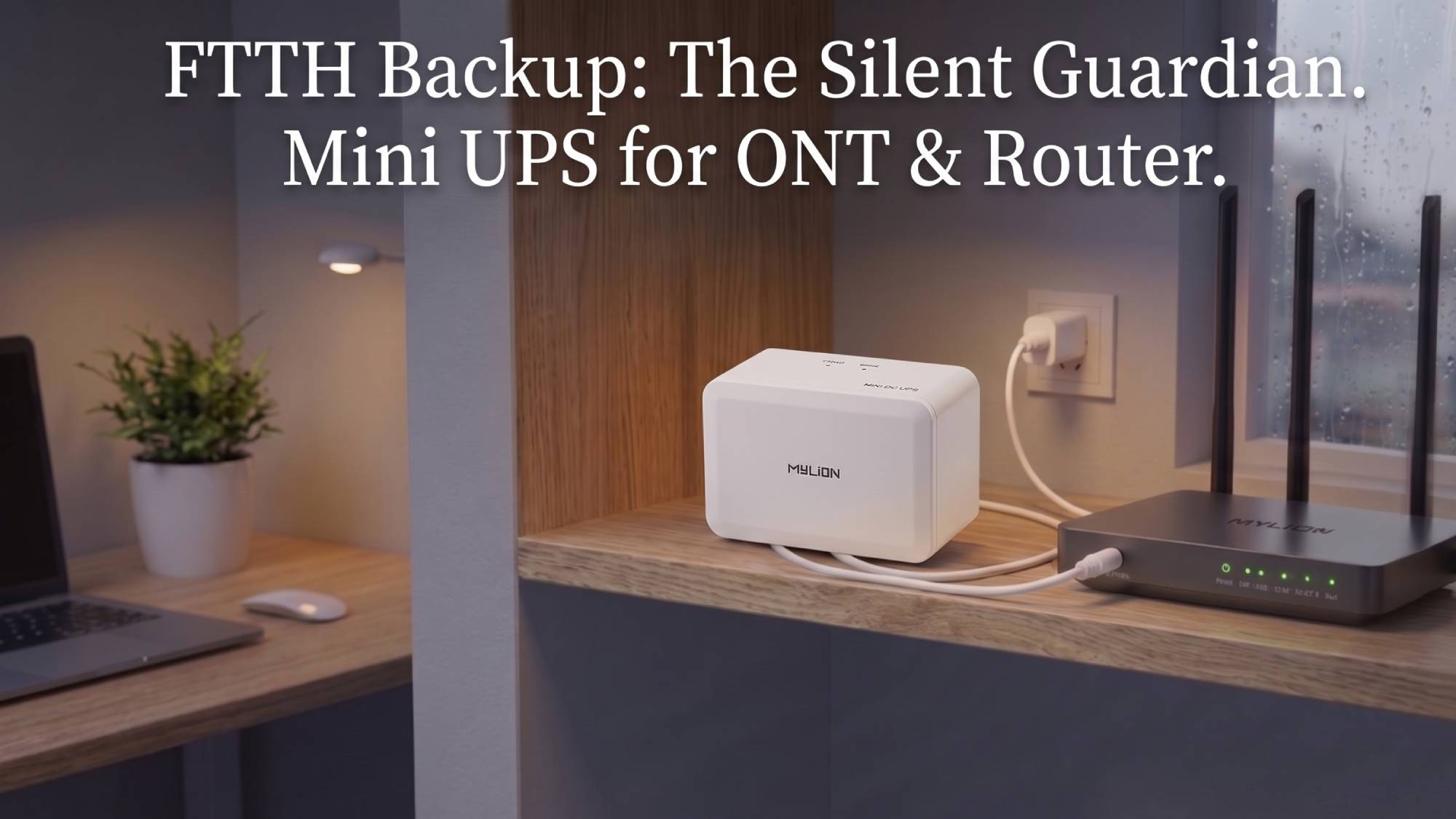
MYLION Technology’s focused approach—combining comprehensive product range, project-based technical support, OEM/ODM flexibility, quality control processes, and international compliance documentation—addresses the specific requirements of professional broadband CPE backup deployment. For organizations seeking reliable backup power solutions matched to real device specifications and deployment conditions, this engineering-driven methodology provides clear advantages over generic UPS products designed for different applications.
http://www.myliontech.com
Shanghai Mylion New Energy Co.,Ltd. -
AuthorPosts

- You must be logged in to reply to this topic.